
Discover the best dog breeds for seniors and learn which gentle, low‑maintenance companions fit perfectly into a relaxed lifestyle. Choosing a dog as a senior — or helping an older person in your life choose one — is one of the most meaningful pet decisions you can make. The right dog brings genuine companionship, daily structure, light activity, and emotional wellbeing that research consistently shows benefits older adults. The wrong dog creates physical strain, anxiety, and ultimately an experience that is overwhelming rather than joyful.
Table of Contents
The good news is that the best dog breeds for seniors are well established, and the framework for choosing within them is straightforward. Dr. Julie Hunt DVM, Veterinarian at Embrace Pet Insurance, puts it clearly: if seniors are looking for a companion throughout their golden years, there are a few things to consider — activity level, size, how affectionate they are, and maintenance. It can be easier to care for a smaller dog than a larger dog. What if the dog gets hurt and needs help getting around?
This guide covers the breeds most consistently recommended by veterinarians and senior care organisations, the framework for choosing between them, and one important practical consideration most guides overlook.
What Makes a Dog Breed Right for a Senior?
Before the breed list, understanding the selection criteria matters. Bestie Paws Hospital’s veterinary analysis identifies four core traits that all senior-friendly breeds share:
Low-to-moderate exercise needs — satisfied with short daily walks rather than long runs or intensive off-lead exercise. A dog that needs two hours of vigorous exercise per day is not appropriate for most seniors regardless of how appealing it is otherwise.
Calm, patient temperament — a dog that does not escalate with boredom, is not reactive to strangers or other dogs, and tolerates the more predictable, quieter rhythms of an older person’s household.
Manageable size and leash strength — a dog that cannot pull its owner off their feet. Fall risk is a genuine concern for older adults — a large, exuberant dog on a lead can cause serious injury. Dogs-portal.com notes that size is less important than temperament and exercise level, but for seniors with any mobility concerns, smaller dogs are safer.
Low-maintenance coat — a dog that doesn’t require daily brushing or expensive professional grooming every few weeks. Some seniors enjoy grooming their dogs as part of the routine, but for many, a low-maintenance coat reduces the practical burden of ownership significantly.
Beyond these four, the Elder Care Alliance — a senior care organisation — adds temperament stability as a key criterion: a dog with a calm, friendly demeanour will be more suitable for older adults, providing emotional comfort without being too demanding.
The Most Important Consideration Most Guides Skip — Adult Dog vs Puppy
Before discussing breeds, this decision matters more than breed choice for many seniors: adopt an adult or senior dog rather than a puppy.
Dogs-portal.com is direct on this: for most seniors, an adult or senior dog is the more practical choice. Puppies require intensive supervision, consistent training, and high energy output for at least the first year. An adult dog in a foster home has a known behavioural history and is typically past the most demanding phase.
What this means practically:
- A 3 to 5-year-old dog of any appropriate breed will be significantly more settled, trained, and manageable than a puppy of the same breed
- An adult dog from a reputable rescue has a known temperament assessment — the guesswork of puppy personality development is removed
- Older dogs often have the same life expectancy as younger adult dogs for many breeds if they are in good health
- The bonding that happens between a senior person and a rescue dog is frequently described as among the most rewarding pet ownership experiences
This is particularly relevant for the breeds listed below — an adult Cavalier King Charles Spaniel from a reputable rescue is often easier than a puppy from a breeder, regardless of the pedigree.
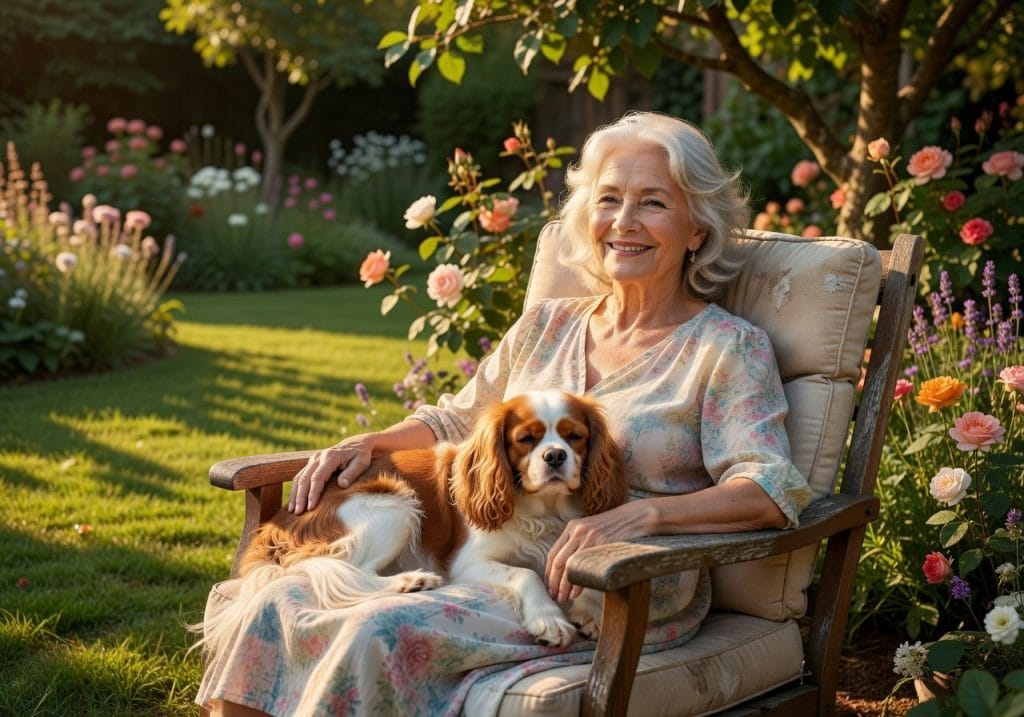
The Best Dog Breeds for Seniors — Our Vetted List
1. Cavalier King Charles Spaniel
The consensus number one recommendation. Bestie Paws Hospital notes that the Cavalier King Charles Spaniel leads virtually every veterinary and senior care organisation’s recommended list — the AKC, Elder Care Alliance, and multiple veterinary sources all rate it the top senior-friendly breed. It combines gentle temperament, indoor adaptability, and manageable care requirements in a 5 to 8kg package.
Cavaliers are naturally calm, affectionate, and deeply bonded with their owners. They are content with modest daily exercise — a 20 to 30-minute walk is sufficient — and are equally happy to spend the rest of the day as lap dogs. They are good with strangers, typically gentle with grandchildren, and non-reactive in most situations.
The health caveat: Cavaliers have documented hereditary health issues including mitral valve disease (a heart condition that affects the majority of the breed by age 5) and syringomyelia (a spinal condition). Regular veterinary monitoring is important, and pet insurance is strongly recommended. The Animal Hospital confirms that these are genuine considerations for the breed.
Best for: Seniors in any living situation — apartments, houses, retirement communities — who want the most affectionate, calm companion available.
2. Shih Tzu
One of the oldest companion dog breeds, developed for exactly the purpose seniors need them for today — to be a calm, loving house dog that requires no outdoor exercise beyond a short daily walk. Shih Tzus are small (4 to 7kg), remarkably calm for their size, non-reactive, and deeply people-oriented.
The Elder Care Alliance confirms Shih Tzus are good for older individuals. They adapt comfortably to apartment living and do not need a garden. Their gentle, cheerful temperament makes them excellent company without the demanding energy of many small breeds.
The grooming consideration: the Shih Tzu’s long, beautiful coat requires regular professional grooming unless kept in a practical short “puppy cut.” For seniors who find regular grooming trips manageable or enjoyable, this is not a problem. For seniors who want minimal grooming commitment, a Shih Tzu kept in a short cut is perfectly comfortable and easy to maintain.
Best for: Seniors in smaller homes or apartments who want a calm, lap-oriented companion and are comfortable with routine professional grooming.
3. Bichon Frisé
The Bichon Frisé brings cheerful, adaptable energy to senior ownership in a small, hypoallergenic package. The Animal Hospital describes them as cheerful, adaptable, and hypoallergenic — their playful demeanour keeps spirits high while their small size makes them easy to manage. They thrive on human interaction and quickly become part of the family.
For seniors with allergies, the Bichon Frisé is the most accessible recommendation on this list — their low-shedding, hypoallergenic coat means they are suitable for people who would otherwise be unable to keep a dog. They require moderate exercise — short daily walks and indoor play — and are comfortable in both apartments and houses.
The grooming consideration: like the Shih Tzu, the Bichon’s curly coat requires regular professional grooming. A short practical cut makes maintenance straightforward.
Best for: Seniors with allergies who want an affectionate, cheerful small companion.
4. French Bulldog
For seniors seeking a genuinely low-energy, low-maintenance dog that is content with minimal exercise, the French Bulldog is the most practical option on this list. The Elder Care Alliance confirms that French Bulldogs are a perfect fit for older adults seeking a low-energy, low-maintenance dog — loyal and friendly with a calm temperament that suits apartment living or smaller homes. They do not require extensive exercise and have minimal grooming needs.
French Bulldogs are quiet (they rarely bark excessively compared to many small breeds), affectionate, and highly adaptable to any living environment. They are comfortable in flats without gardens and require only short, leisurely walks.
The health caveat — important: French Bulldogs are a brachycephalic breed. Their flat-faced structure causes breathing difficulties, heat intolerance, and a range of associated health issues. They require careful temperature management (no exercise in hot weather, air conditioning in summer), and veterinary costs can be significant over their lifetime. Bestie Paws Hospital flags this honestly: several breeds on the senior list have health trade-offs that increase veterinary monitoring over time, and the French Bulldog is one of them.
For seniors who are aware of and comfortable with this health management and cost commitment, French Bulldogs are wonderful companions. For seniors who want a lower-maintenance health profile, the Cavalier or Shih Tzu are better choices.
Best for: Seniors in smaller homes or apartments who want the most calm, lowest-exercise companion available and are comfortable with brachycephalic health management.
5. Poodle (Miniature or Toy)
Poodles combine the intelligence and trainability of a much larger working dog with small, manageable size. The AKC consistently includes Poodles among the best dog breeds for seniors, noting that their intelligence, gentleness, and hypoallergenic coat make them particularly well-suited for older adults.
Miniature Poodles (4 to 7kg) and Toy Poodles (under 4kg) both adapt readily to any living situation. Their intelligence means they train easily, respond well to routine, and form very close bonds with their primary person. They are playful but not overwhelming — their energy is easily satisfied with a daily walk and some indoor engagement.
Their hypoallergenic, minimal-shedding coat makes them appropriate for seniors with allergies. They do require regular professional grooming — the classic Poodle clip is not the only option; a simple, practical short cut is entirely appropriate.
Best for: Seniors who want an intelligent, trainable, hypoallergenic companion and enjoy the engagement of a dog that responds actively to them.
6. Maltese
Dr. Julie Hunt DVM describes the Maltese as bred as a lap dog that enjoys cuddling, earning the nickname “Velcro dog” — affectionate with a gentle and intelligent personality, making them excellent companion pets. Weighing typically between 2 and 4kg, they are one of the smallest dogs on this list and require minimal physical strength to manage.
Maltese are content with short walks and indoor play. They form very close attachments to their primary person and provide constant, gentle companionship. They are good with visitors and typically calm in various environments.
The grooming consideration: the Maltese’s long, silky white coat requires regular grooming. A short practical cut eliminates most of the maintenance while preserving the breed’s natural temperament.
Best for: Seniors who want an extremely small, close-bonding companion dog with minimal exercise demands.
7. Greyhound (retired racing)
This recommendation surprises most people — but Greyhounds are among the best-kept secrets in senior dog ownership. The Animal Hospital describes them as a surprisingly low-maintenance large breed — known as “couch potatoes,” they enjoy lounging indoors but appreciate a daily walk, with a calm nature that makes them wonderful for retirees seeking a peaceful companion.
Retired racing Greyhounds (typically 4 to 6 years old when rehomed) are gentle, quiet, non-reactive, and need very little exercise despite their athletic appearance. They are completely content to sleep for the majority of the day and require only one or two short to moderate walks. They do not bark excessively and are calm around the home.
The practical consideration: Greyhounds are large dogs — typically 25 to 35kg. For seniors with no mobility concerns and who have always had larger dogs, a retired Greyhound is excellent. For seniors where any pull risk is a concern, a smaller breed is more appropriate. The lead must always be used — Greyhounds have a powerful hunting instinct and cannot be trusted off-lead in open areas.
Best for: Seniors who have previously owned larger dogs, have no fall-risk concerns, and want a gentle, quiet companion with surprisingly modest exercise needs.
8. Chihuahua
The Chihuahua’s tiny size — typically 2 to 3kg — makes it the most physically manageable dog available. The Elder Care Alliance describes them as affectionate dogs that form strong bonds with their owners and are fiercely loyal — ideal for individuals who prefer a lightweight dog. They enjoy short walks and indoor play, making them excellent companions for older adults seeking a lap dog.
Chihuahuas are essentially lifelong lap dogs. They travel easily, require minimal exercise, and can provide intense companionship to a single person. They are particularly devoted to one primary person and can be reserved with others — a quality that suits some seniors perfectly and not others at all.
The temperament consideration: Chihuahuas can be stubborn and may have a tendency to bark or be reactive if not well socialised. An adult rescue Chihuahua with a known gentle history sidesteps this concern. A puppy Chihuahua may not.
Best for: Seniors living alone who want the most portable, physically manageable companion possible and are comfortable with an extremely close-bonding, sometimes possessive personality.
9. Pug
Pugs are gentle, affectionate, and completely content with minimal exercise — making them one of the most naturally suited breeds to senior lifestyle. They are cheerful, sociable, and reliably good-natured with virtually everyone.
The health caveat — the most significant on this list: Pugs are a severely brachycephalic breed with documented chronic health issues including breathing difficulties, eye problems, skin fold infections, and spinal problems. Their veterinary costs over a lifetime can be substantial. Bestie Paws Hospital is honest: several breeds have health trade-offs, and the Pug has perhaps the most significant of all breeds on this list.
For seniors who are committed to managing a dog’s health proactively and have the financial capacity for higher veterinary costs, a Pug is a wonderful companion. For seniors where lower veterinary cost commitment is a priority, the Cavalier or Shih Tzu are more appropriate.
Best for: Seniors who are experienced dog owners, understand brachycephalic health requirements, and want a very calm, affectionate companion.
10. Golden Retriever (active seniors only)
Golden Retrievers appear on many senior breed lists and deserve honest treatment here. They are extraordinary companion animals — used in more hospice and senior care programmes than any other breed, with therapy-level emotional sensitivity and a deeply gentle temperament. They are brilliant with grandchildren, form profound bonds, and bring joy that few other breeds match.
However: they require significant daily exercise (an hour or more), shed heavily, and weigh 25 to 35kg. Bestie Paws Hospital’s honest assessment is valuable here: for genuinely active seniors aged 60 to 72 who walk regularly, are physically capable, and want a deeply bonded large companion, the Golden’s extraordinary emotional sensitivity is unmatched. For seniors with any mobility limitations, fall risk concerns, or reduced exercise capacity, a smaller breed serves them better.
Best for: Active seniors without mobility concerns who walk regularly and can commit to the exercise requirements.
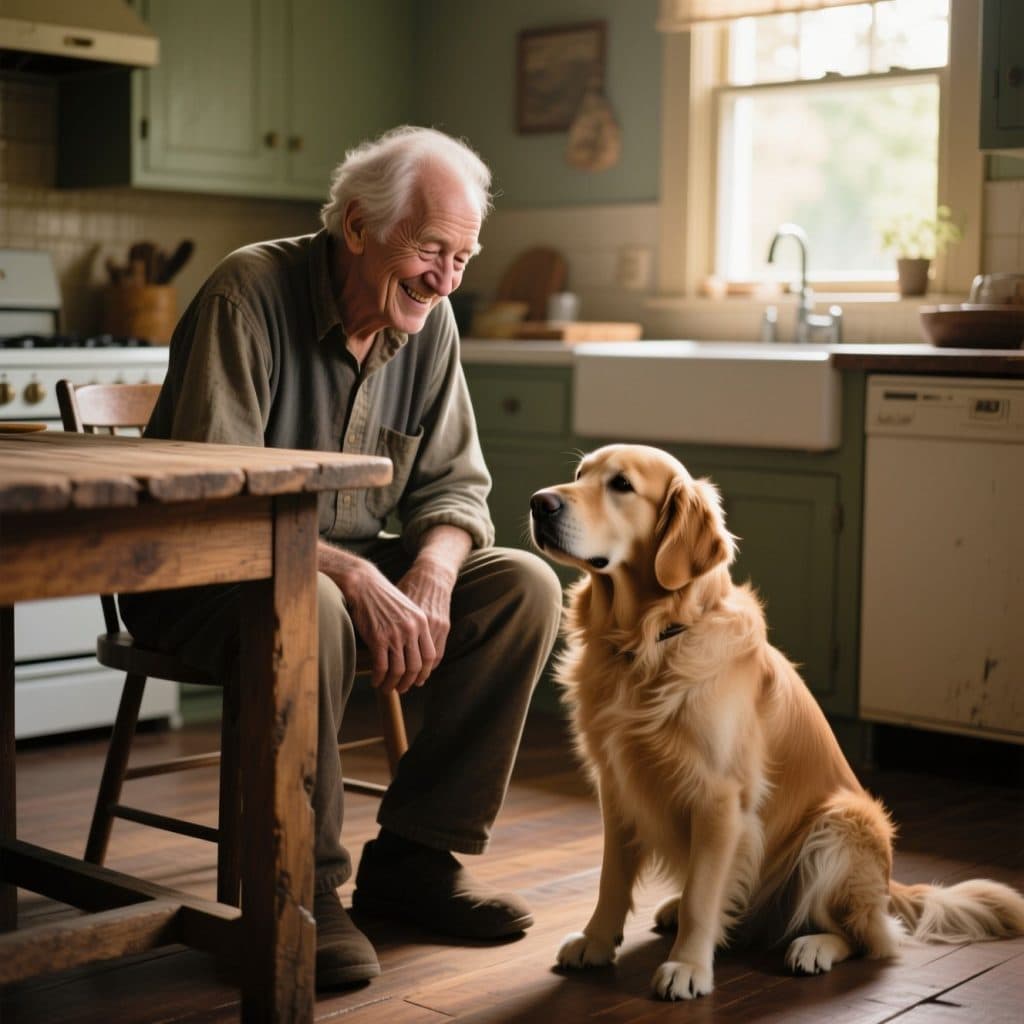
Practical Considerations Beyond Breed
Pet insurance — dogs-portal.com recommends considering pet insurance to reduce unexpected veterinary costs. This is practical advice at any age, but particularly relevant for seniors on fixed incomes and for breeds with documented health conditions (Cavaliers, French Bulldogs, Pugs).
Training classes — dogs-portal.com also recommends enrolling in at least a basic obedience class to establish clear communication. Even a calm adult dog benefits from a few sessions to establish routine and recall, and the social aspect is valuable for senior owners too.
Rescue vs breeder — reputable breed-specific rescues are an excellent source of adult dogs with assessed temperaments. For most seniors, adopting a 3 to 6-year-old rescue dog of an appropriate breed is the most practical choice.
Trial fostering — some rescue organisations offer fostering arrangements that allow you to assess compatibility before committing to adoption. An excellent option for seniors who are uncertain about whether dog ownership is right for their current circumstances.
Plan for care — a responsible consideration often overlooked: who will care for the dog if the owner’s health changes? Having a clear plan — family members, a trusted friend, a rescue organisation willing to take the dog back — is a kindness to both the owner and the dog.


Natural Treats for Senior Dog Owners
Once you have your dog, natural treats make training, bonding, and daily care simpler and more rewarding. For the calm, often smaller breeds on this list, the best treats are:
- Small, soft treats — easy to use as training rewards without calorie overload
- Natural chews — beef gullet, dried fish skins, and bully sticks provide enrichment and dental benefit with minimal effort from the owner
- Low-calorie vegetable treats — carrot sticks, cucumber slices, and green beans require no preparation and are appropriate for weight-conscious small breeds
Browse our Training Treats section for our top recommendations for small dogs and companion breeds, and our Senior Dog Treats section for treats specifically selected for older dogs.
The Bottom Line
The best dog breeds for seniors combine calm temperament, manageable size, modest exercise needs, and reliable affection. The Cavalier King Charles Spaniel sits at the top of virtually every veterinary and senior care organisation’s list for good reason. The Shih Tzu, Bichon Frisé, Miniature Poodle, French Bulldog, and Maltese are all excellent alternatives depending on individual circumstances.
For most seniors, adopting an adult dog from a reputable rescue provides all the joy of dog ownership with significantly less of the challenge of the puppy stage. And for any senior considering dog ownership — the evidence on the wellbeing benefits is strong. A dog gently adds structure to life, encourages light activity, reduces loneliness, and provides the kind of unconditional daily companionship that is genuinely good for health and happiness.
Frequently Asked Questions
What is the best dog breed for seniors? The Cavalier King Charles Spaniel is the most consistently recommended breed by veterinarians and senior care organisations — combining gentle temperament, indoor adaptability, and modest exercise needs. Shih Tzus, Bichon Frisés, and Miniature Poodles are also excellent choices.
Should seniors get a puppy or an adult dog? An adult or senior dog is usually the more practical choice. Puppies require intensive training and supervision for at least a year. Adult rescue dogs have known temperaments and are past the most demanding phase.
What size dog is best for seniors? Smaller dogs are generally easier to manage physically — they pose less fall risk on a lead, require less strength to lift, and are more manageable in any living environment. However, a calm medium-sized dog with low energy can also suit seniors well if there are no mobility concerns.
Are hypoallergenic dog breeds good for seniors? Yes — for seniors with allergies, hypoallergenic low-shedding breeds including the Bichon Frisé, Maltese, and Miniature Poodle are excellent choices.
What about brachycephalic breeds like French Bulldogs and Pugs? French Bulldogs and Pugs have excellent temperaments for seniors but come with documented health costs and management requirements. They are good choices for seniors who are aware of and comfortable with the health commitment involved.
Is a Greyhound a good dog for a senior? Surprisingly yes — for seniors without mobility concerns who have owned dogs before. Retired racing Greyhounds are remarkably calm, low-energy, and gentle despite their size. Not appropriate for seniors with fall-risk concerns given their size.
Sources:
- American Kennel Club — Golden Retrievers, Cavalier King Charles Spaniels, and Poodles among best breeds for seniors; trainability, activity level, size, and affection as key selection criteria; hypoallergenic breeds recommended for seniors with allergies (akc.org)
- Elder Care Alliance — seven best dog breeds for seniors including French Bulldog, Chihuahua, and Bichon Frisé; temperament stability, size adaptability, and grooming needs as key criteria for older adults (eldercarealliance.org): https://eldercarealliance.org/blog/the-7-best-dog-breeds-for-seniors/
- Dr. Julie Hunt DVM, Veterinarian, Embrace Pet Insurance — activity level, size, affection level, and maintenance as the key considerations for senior dog ownership; smaller dogs are easier to manage; important to consider what happens if the dog gets hurt and needs help getting around (bestlifeonline.com): https://bestlifeonline.com/best-dog-breeds-for-seniors-low-maintenance/
- The Animal Hospital — Greyhounds described as surprisingly low-maintenance large breed; couch potatoes that enjoy lounging indoors but appreciate daily walks; Bichon Frisé described as cheerful, adaptable, and hypoallergenic (theanimalhospital.net): https://www.theanimalhospital.net/popular-dog-breeds-for-seniors-and-retirees/
- Bestie Paws Hospital — Cavalier King Charles Spaniel leads virtually every veterinary and senior care organisation’s recommended list; four key traits shared by all senior-friendly breeds; honest assessment of brachycephalic health trade-offs; adult and rescue dogs recommended over puppies for most seniors (bestiepaws.com): https://www.bestiepaws.com/dog/best-dog-breeds-for-seniors/
- Dogs-portal.com — for most seniors an adult or senior dog is the more practical choice; size less important than temperament and exercise level; pet insurance and basic obedience class recommended (dogs-portal.com): https://www.dogs-portal.com/guides/best-dogs-for-seniors
For natural treat recommendations tailored to smaller companion breeds and senior dogs, browse our Senior Dog Treats and Training Treats sections — or explore our Can Dogs Eat series for guidance on safe and nutritious foods at every life stage.