
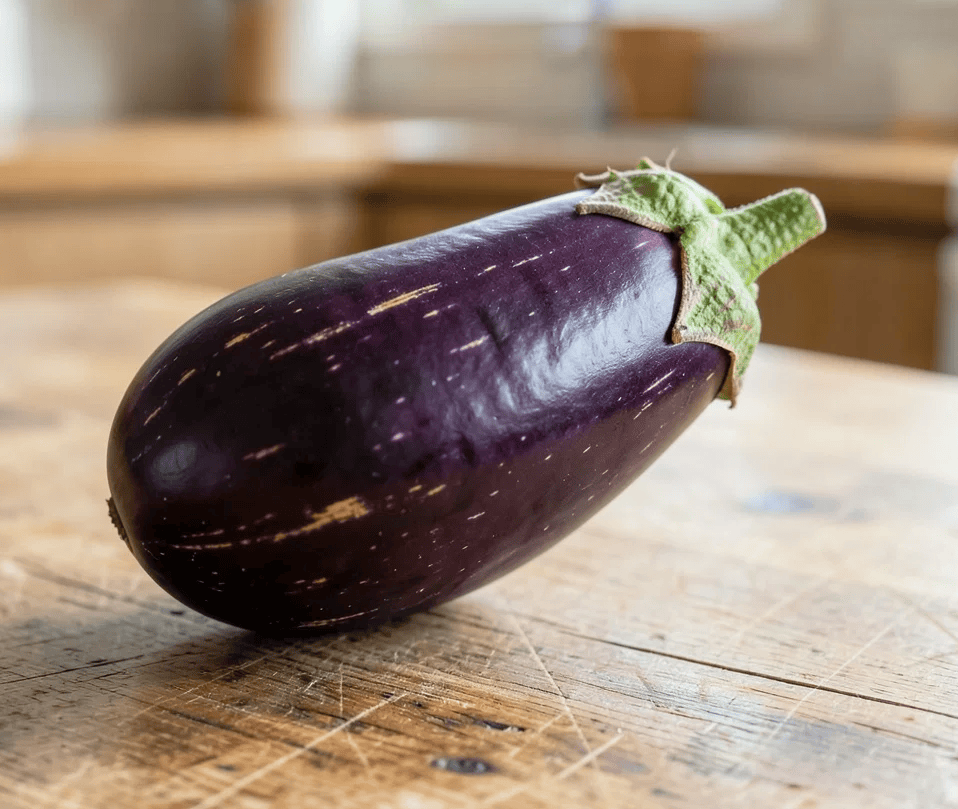
Yes — dogs can eat aubergine (known as eggplant in the US, Australia, and much of the world) in small amounts when properly prepared. PetMD confirms that when fed in moderation, dogs can eat eggplant safely, and that plain, cooked eggplant is fine for healthy adult dogs on occasion. Dr. Aliya McCullough DVM, Fetch’s on-staff veterinarian, confirms that aubergine has health benefits for dogs including fibre, antioxidants, potassium, calcium, vitamin B6, and vitamin K.
Table of Contents
However, aubergine is one of the more nuanced vegetables in this series. As a member of the nightshade family it contains solanine — the same compound found in raw potatoes and green tomatoes — and it has a meaningful allergy risk, an oxalate content that matters for dogs with kidney issues, and a preparation requirement (cooked, plain, leaves and stem removed) that must be followed every time. For some dogs, the guidance is to avoid it entirely.
Aubergine vs Eggplant — The Same Vegetable
A quick regional clarification:
- Aubergine — the term used in the UK, Ireland, France, and much of Europe
- Eggplant — the term used in the US, Australia, Canada, and parts of Asia
- Brinjal — the term used in South Africa and parts of South Asia
All refer to Solanum melongena — the same vegetable. All guidance in this article applies equally regardless of what you call it.
Is Aubergine Good for Dogs?
When prepared correctly, aubergine offers genuine nutritional value:
Dietary Fibre
PetMD identifies fibre as one of aubergine’s key benefits, noting it can be a good way to boost a dog’s fibre intake. The fibre content supports digestive regularity and gut microbiome health, and promotes satiety — useful for dogs on calorie-managed diets.
Antioxidants — Including Nasunin
Aubergine contains a range of antioxidant compounds. Most notably, the deep purple skin contains nasunin — an anthocyanin pigment with documented antioxidant properties that may protect brain cell membranes from oxidative damage. PetMD specifically confirms that aubergine is rich in antioxidants. These compounds reduce systemic oxidative stress and support immune resilience.
Vitamins B6 and K
Dr. Aliya McCullough DVM confirms vitamin B6 and vitamin K are present in aubergine. B6 supports brain health, hormone regulation, and immune function. Vitamin K is essential for proper blood clotting and bone metabolism.
Potassium and Manganese
Potassium supports heart function, nerve signalling, and muscle development. Manganese supports enzyme function and bone health. Both present in useful amounts.
Calcium
Dr. McCullough identifies calcium as a benefit — supporting bone and teeth health and nerve function.
Low in Calories
Aubergine is very low in calories — approximately 25 calories per 100g — making it one of the lighter vegetable treats by calorie content.
The honest caveat from Dr. McCullough: when offering eggplant as a treat, which should be less than 10% of their daily caloric intake, a pup isn’t likely getting enough of these nutrients to make a significant impact on their health. The nutritional benefits are real but modest at treat-level portions. Aubergine is not a dietary supplement — it is a safe occasional treat with some genuine nutritional value.
The Nightshade and Solanine Context
This is the most important nuance about aubergine for dogs, and it requires honest, proportionate treatment.
Aubergine belongs to the nightshade family (Solanaceae) — the same plant family as tomatoes, potatoes, and bell peppers. Like other nightshade family members, it contains solanine — a glycoalkaloid compound that is toxic in high concentrations.
However — and this is the critical context PetMD provides — the solanine concentration in aubergine flesh is significantly lower than in raw potatoes and much lower than in green tomatoes or potato plant material. PetMD is specific: too much solanine can lead to upset stomach, weakness, or difficulty breathing, though it would take a lot of eggplant to cause an issue.
This positions aubergine very differently from raw potato (where solanine toxicity is a genuine primary concern) and much closer to ripe tomato (where the solanine in the ripe flesh is low enough to be safe in appropriate amounts). The ASPCA does not list Solanum melongena (aubergine/eggplant) as a toxic plant for dogs.
What this means practically:
- A small amount of plain cooked aubergine is not a toxicity concern for healthy adult dogs
- The solanine concern scales up with quantity — not relevant at treat-level portions
- Raw aubergine has higher solanine than cooked — cooking reduces solanine concentration meaningfully
- The leaves and stem of the aubergine plant contain significantly higher solanine than the fruit — these must never be given to dogs
The Leaves and Stem — Never Give to Dogs
This is the clear danger point with aubergine. The leaves and stem of the aubergine plant — unlike the flesh — contain solanine in concentrations high enough to cause genuine toxicity symptoms.
Dial A Vet confirms: remove the stem and leaves as they contain higher levels of solanine. PetMD’s preparation guidance specifies: wash it thoroughly and remove the stem.
Signs of solanine toxicity from leaves or stem include vomiting, diarrhoea, lethargy, and in more serious exposures weakness and difficulty breathing. If your dog eats aubergine plant material (leaves, stems, or the plant growing in your garden), contact your vet immediately.
For serving: remove the stem entirely and any attached green calyx before preparing. Never give dogs access to aubergine plants growing in the garden.
The Oxalate Concern — Kidney Health
Like spinach and beetroot, aubergine contains oxalates — naturally occurring compounds that can combine with calcium in the body to form calcium oxalate crystals. Dial A Vet confirms: oxalates can contribute to kidney stones in dogs prone to kidney issues.
At treat-level portions, the oxalate content in aubergine is not a concern for healthy dogs with normal kidney function. The concern is specific to:
- Dogs with a history of calcium oxalate bladder or kidney stones
- Dogs with chronic kidney disease
- Dogs with arthritis (oxalates can interfere with calcium absorption, potentially affecting joint inflammation)
For these dogs, aubergine should be avoided. For all other healthy dogs, the oxalate content at appropriate portions is not a meaningful risk.
The Allergy Risk — More Common Than With Most Vegetables
Aubergine is one of the more commonly cited allergenic vegetables for dogs, and this is flagged across multiple sources. PetMD notes that it’s possible — though unlikely — that a dog could be allergic to eggplant. Dr. McCullough confirms some dogs might not tolerate the vegetable well and develop symptoms of upset stomach.
Signs of aubergine sensitivity or allergy:
- Persistent itching, particularly around paws, ears, and belly
- Skin redness, rash, or hives
- Gastrointestinal upset — vomiting, diarrhoea, gas
- Difficulty breathing in serious allergic reactions (rare)
When introducing aubergine for the first time, start with a single very small piece and monitor for 24 to 48 hours before offering more. Stop immediately and consult your vet if any reaction develops.
Dogs who have shown sensitivity to other nightshade family vegetables — tomatoes, peppers — may have a higher likelihood of reacting to aubergine given the botanical relationship. Start with particular caution in these dogs.
Who Should Not Eat Aubergine
The following dogs should avoid aubergine entirely:
- Dogs with a history of calcium oxalate kidney or bladder stones
- Dogs with chronic kidney disease
- Dogs with arthritis where oxalate intake is being managed
- Dogs with known nightshade sensitivity
- Dogs who have previously reacted to tomatoes, potatoes, or peppers
For all other healthy dogs without these conditions, small amounts of plain cooked aubergine are appropriate as an occasional treat.
Preparation — The Rules That Apply Every Time
1. Always cooked — never raw Raw aubergine has a higher solanine concentration than cooked, is harder to digest, and has a bitter taste most dogs find unappealing. Dr. McCullough confirms: pet parents can bake, grill, or roast the vegetable without oils or seasonings to soften it. Cooked is always preferable.
2. Peel the skin (recommended) PetMD recommends peeling aubergine before feeding to dogs — the skin is tougher to digest. The skin also contains a higher concentration of solanine than the flesh. For dogs with sensitive stomachs, peeling is particularly important.
3. Remove stem and any green parts — always The stem and any attached green calyx contain higher solanine. Remove entirely before cooking.
4. Cook plain — absolutely no seasonings The most important preparation rule. Common aubergine preparations for human cooking that are toxic or dangerous for dogs:
Aubergine parmigiana (eggplant parmesan) ❌ — breadcrumbs, cheese, olive oil, garlic, and often salt. The garlic content alone makes it toxic. Never.
Moussaka ❌ — contains onion, garlic, lamb mince, tomato sauce, and béchamel. Multiple toxic ingredients. Never.
Ratatouille ❌ — contains onion, garlic, olive oil, herbs, and various seasonings. Onion and garlic are toxic to dogs. Never.
Baba ghanoush ❌ — contains tahini, garlic, lemon, and salt. Never.
Caponata ❌ — contains capers, vinegar, sugar, onion, and sometimes raisins. Multiple concerns. Never.
Plain baked/steamed aubergine ✅ — no oil, no salt, no seasoning, completely plain. The only appropriate preparation.
5. Cut into small pieces Dice into bite-sized pieces appropriate for your dog’s size to eliminate choking risk before serving.
How Much Aubergine Can a Dog Have?
The 10% daily calorie guideline applies. Given the solanine, oxalate, and allergy considerations, aubergine is better treated as an infrequent occasional treat rather than a vegetable to add to every meal.
Practical guide:
- Small dogs (under 10kg) — a few small bite-sized pieces, once or twice a week at most
- Medium dogs (10–25kg) — a tablespoon or so of cooked aubergine, once or twice a week at most
- Large dogs (over 25kg) — a few tablespoons, once or twice a week at most
Never daily. The cumulative oxalate and solanine considerations make infrequent occasional use the appropriate framework.
Can Puppies Eat Aubergine?
With caution. Puppies have developing digestive systems that are more sensitive to the compounds in nightshade family vegetables. The allergy risk means starting with an extremely small amount and monitoring very carefully. There are simpler, lower-risk vegetable options for puppies — courgette, cucumber, and carrot are all more appropriate starting points. If you choose to introduce aubergine to a puppy, do so after six months and only in tiny amounts of cooked, plain flesh.
Can Senior Dogs Eat Aubergine?
Senior dogs without kidney disease or arthritis can have small amounts of plain cooked aubergine. The antioxidant content is relevant for older dogs where oxidative stress increases with age. However, senior dogs with any kidney or joint concerns should avoid it given the oxalate content.
What to Do If Your Dog Ate Aubergine Leaves or Stem
Contact your vet immediately. Describe what was eaten and the approximate amount. Do not wait for symptoms — solanine toxicity from plant material can develop within a few hours. Monitor for vomiting, diarrhoea, lethargy, and weakness.
If your dog ate a small piece of plain cooked aubergine flesh and appears well, simply monitor for any digestive reaction or allergy signs over 24 to 48 hours.
The Bottom Line
Aubergine is safe for most healthy adult dogs in small amounts of plain, cooked flesh with stem removed — confirmed by PetMD and Dr. Aliya McCullough DVM. The nutritional benefits are real but modest at treat-level portions. The solanine in the flesh is low enough not to be a meaningful concern at appropriate quantities, but the leaves and stem must never be given to dogs.
Aubergine is not for every dog — those with kidney issues, a history of oxalate stones, arthritis, or known nightshade sensitivity should avoid it. For all others, the occasional small piece of plain cooked aubergine is a safe and acceptable treat. Just never share from the dinner plate when it has been prepared as part of a human dish.
Frequently Asked Questions
Can dogs eat aubergine? Yes — plain, cooked aubergine flesh without stem or leaves is safe for most healthy adult dogs in small amounts. PetMD confirms it is safe when fed in moderation.
Is aubergine toxic to dogs? The flesh of cooked aubergine is not classified as toxic — the ASPCA does not list it as a toxic plant for dogs. However, the leaves and stem contain higher solanine and must never be given to dogs.
Can dogs eat aubergine skin? Not recommended — the skin is tougher to digest and contains higher solanine than the flesh. PetMD recommends peeling before serving.
Can dogs eat aubergine raw? Not recommended — raw aubergine has higher solanine, is harder to digest, and most dogs find it bitter. Always cook first.
Can dogs eat moussaka or ratatouille? No — both contain garlic and onion which are toxic to dogs. Never share aubergine from any human dish prepared with seasoning.
Which dogs should avoid aubergine entirely? Dogs with kidney disease, a history of oxalate kidney or bladder stones, arthritis, or known nightshade sensitivity should avoid aubergine.
Sources:
- PetMD — when fed in moderation, dogs can eat eggplant safely; eggplant contains solanine but it would take a lot to cause an issue; eggplant is rich in fibre and antioxidants; peel before feeding as skin can be tougher; not suitable for dogs with kidney issues (petmd.com): https://www.petmd.com/dog/nutrition/can-dogs-eat-eggplant
- Fetch Pet Insurance — Dr. Aliya McCullough DVM, on-staff veterinarian: eggplant has health benefits including fibre, antioxidants, potassium, calcium, vitamin B6, and vitamin K; at treat-level portions pup isn’t likely getting enough nutrients to make a significant impact; some pups might not tolerate the vegetable well; remove stems and leaves which contain solanine (fetchpet.com): https://www.fetchpet.com/the-dig/can-dogs-eat-eggplant
- Dial A Vet — eggplant is generally safe for dogs in moderation; solanine sensitivity can cause vomiting, diarrhoea, or lethargy; oxalates can contribute to kidney stones in prone dogs; remove stem and leaves as they contain higher solanine; cook without oils, spices, or seasonings (dialavet.com): https://www.dialavet.com/blog/can-dogs-eat-eggplant
- ASPCA Animal Poison Control Center — Solanum melongena (eggplant/aubergine) is not listed as a toxic plant for dogs; garlic and onion (used in typical aubergine preparations) are classified as toxic to dogs (aspca.org)
For comparison with other nightshade family vegetables, see our Can Dogs Eat Tomatoes? and Can Dogs Have Raw Potatoes? guides — or browse the full Can Dogs Eat series for more guides on safe and unsafe foods for dogs.