
Yes, dogs can eat broccoli — but it comes with an important caveat that most articles on this topic don’t explain clearly enough. Broccoli is safe in small amounts and genuinely nutritious, confirmed as an acceptable treat by the American Kennel Club. However, it contains naturally occurring compounds called isothiocyanates that can cause significant gastric irritation in dogs when eaten in anything beyond modest quantities. Understanding this — and knowing exactly how much is too much — is the difference between a useful occasional treat and an unnecessary trip to the vet.
Disclosure: This post contains affiliate links. As an Amazon Associate, we earn from qualifying purchases at no additional cost to you.
Table of Contents
Here’s everything you need to know about feeding broccoli to dogs safely.
Is Broccoli Good for Dogs?
In appropriate amounts, broccoli offers a solid nutritional profile:
Vitamin C
Broccoli is one of the richer vegetable sources of vitamin C — useful as an immune system booster and antioxidant, even though dogs produce their own vitamin C naturally.
Vitamin K
Vitamin K is essential for proper blood clotting and plays an important role in bone metabolism. Broccoli is particularly high in vitamin K1 — higher than most other commonly fed vegetables.
Dietary Fibre
Broccoli provides both soluble and insoluble fibre, supporting healthy digestion and regular bowel movements. The fibre content contributes to a feeling of fullness, making it useful for dogs on calorie-restricted diets.
Potassium
Potassium supports healthy heart function, nerve signalling, and muscle development — an important mineral at every life stage.
Folate
Folate supports healthy cell production and red blood cell formation, particularly relevant for growing puppies and pregnant dogs.
Low in Fat and Calories
Broccoli is exceptionally low in calories and contains virtually no fat, making it one of the more weight-friendly vegetable treats available. Raw broccoli stalks in particular provide satisfying chewing without any meaningful caloric impact.
Dental Benefit
Chewing on raw broccoli stalks acts as a mild abrasive on teeth, helping to reduce plaque and tartar build-up between brushings. A useful bonus — particularly for dogs who resist tooth brushing.
The Isothiocyanate Problem — What You Need to Know
This is the part most articles skip over or underexplain — and it’s the most important part.
Broccoli belongs to the cruciferous vegetable family (along with cauliflower, cabbage, Brussels sprouts, and kale). All cruciferous vegetables contain naturally occurring compounds called isothiocyanates — specifically, the broccoli florets contain the highest concentration.
In human nutrition, isothiocyanates are frequently praised for their antioxidant and potential cancer-protective properties. In dogs, however, they behave differently. As AKC Chief Veterinarian Dr. Jerry Klein DVM notes, isothiocyanates can cause mild to potentially severe gastric irritation in dogs — and the severity of the reaction depends directly on the amount consumed.
The thresholds are well established:
- Under 10% of daily food intake — generally safe for most dogs, with minimal digestive risk
- 10% to 25% of daily intake — risk of digestive irritation rises sharply; symptoms including vomiting, diarrhoea, and gas become likely
- Over 25% of daily intake — can be genuinely toxic
The key takeaway is that broccoli isn’t a vegetable you can feed generously. The same florets that provide vitamins and antioxidants also contain compounds that become a problem the moment portions exceed the modest treat threshold.
Florets vs Stalks — Which Part Is Safer?
This distinction matters and is worth understanding before serving broccoli to your dog.
Florets contain the highest concentration of isothiocyanates — they’re the most nutritious part but also the part that needs the most careful portion control. Given in small amounts, they’re fine. Given in large amounts, they’re the primary source of digestive irritation.
Stalks contain far lower concentrations of isothiocyanates and are generally better tolerated. They also provide the dental scrubbing benefit from chewing and are a useful low-risk treat option for dogs who enjoy gnawing on something crunchy. The main concern with stalks is their size and firmness — they must always be cut into appropriate pieces to prevent choking, particularly for small dogs.
Leaves — the leaves of the broccoli plant are safe and contain useful nutrients, though they’re rarely discussed. If your dog happens to get hold of a broccoli leaf, it’s nothing to worry about.
How Much Broccoli Can a Dog Eat?
Keeping broccoli well under 10% of your dog’s daily food intake is the essential rule. In practical terms:
- Small dogs (under 10kg) — 1 to 2 small florets or a few pieces of stalk, a few times a week
- Medium dogs (10–25kg) — 2 to 3 florets or a few stalk pieces, a few times a week
- Large dogs (over 25kg) — 3 to 4 florets or a generous handful of stalk pieces, a few times a week
Always start with a single small piece when introducing broccoli for the first time. Monitor your dog for any signs of digestive discomfort — gas, bloating, loose stools — before offering more.
Raw or Cooked — Which Is Better?
Both are safe for dogs, but they have different characteristics worth knowing:
Raw broccoli — retains the most nutritional value and provides the maximum dental benefit from chewing. It’s also the most likely to cause gas and digestive discomfort, particularly in dogs with sensitive stomachs, because the fibrous cell walls haven’t been broken down by heat. Always wash thoroughly to remove any pesticide residue.
Steamed broccoli — the best cooked option. Steaming softens the texture (much easier to digest, particularly for smaller dogs, puppies, and seniors) while retaining more nutritional value than boiling. Serve plain — no butter, oil, salt, garlic, or seasoning of any kind.
Boiled broccoli — safe but leaches more vitamins into the cooking water than steaming. If you boil broccoli, keep the cooking time short and serve plain.
Frozen broccoli — fine if plain and unseasoned. Thaw before serving for most dogs — frozen broccoli stems in particular can be very hard and may cause dental damage or choking if served completely frozen.
Fried or seasoned broccoli — never. Oil, butter, garlic, onion, and salt are all harmful to dogs in varying degrees. Only plain broccoli is appropriate.
Can Puppies Eat Broccoli?
With extra caution. Puppies have more sensitive digestive systems than adult dogs and are less tolerant of isothiocyanates. Lightly steamed broccoli in very small amounts is safer than raw for puppies, and portions should be even smaller than the adult guide above. Monitor carefully for any signs of digestive discomfort and stop immediately if any occur.
Given that there are gentler vegetable treat options for puppies — carrot, cucumber, courgette — broccoli is not the obvious starting point for a young dog’s vegetable introduction.
Can Senior Dogs Eat Broccoli?
Yes, in appropriate amounts. The vitamin K content is particularly relevant for older dogs, where bone metabolism support becomes increasingly important. Steamed broccoli is preferable to raw for senior dogs, as the softer texture is easier on older teeth and more digestible for a digestive system that’s less efficient than it once was.
Senior dogs with thyroid conditions should check with their vet before eating broccoli — cruciferous vegetables contain compounds called goitrogens that can interfere with thyroid function in large amounts, though the amounts involved in modest treat-level feeding are unlikely to cause problems for most dogs.
What About Other Cruciferous Vegetables?
Since broccoli raises the isothiocyanate question, it’s worth knowing where the rest of the cruciferous family stands for dogs:
- Cauliflower ✅ — safe in moderation, same isothiocyanate caveat applies, slightly lower concentration than broccoli
- Brussels sprouts ✅ — safe in very small amounts, but notorious for causing significant gas — more so than broccoli
- Cabbage ✅ — safe in moderation, same gas caveat, cooked is preferable
- Kale ✅ — safe in small amounts but contains calcium oxalate and thallium which can cause issues in larger quantities — keep portions minimal
- Spinach ✅ — safe in moderation, but high in oxalic acid which can interfere with calcium absorption — occasional treat only
All of these follow the same basic rule as broccoli: appropriate for occasional use in small amounts, not suitable as a dietary staple.
Signs Your Dog Has Eaten Too Much Broccoli
The isothiocyanates in broccoli cause gastrointestinal irritation when consumed in excess. Signs to watch for include:
- Vomiting
- Diarrhoea or loose stools
- Excessive gas or bloating
- Visible abdominal discomfort
- Lethargy
- Loss of appetite
Mild symptoms should resolve within 24 hours. If they persist, worsen, or your dog seems genuinely unwell, contact your vet.
How to Serve Broccoli to Your Dog
Raw florets — wash thoroughly, cut into small pieces appropriate for your dog’s size, serve. Start with a single piece.
Raw stalk pieces — cut stalks into rounds or batons, serve as a crunchy treat. A good lower-risk option compared to florets given the lower isothiocyanate concentration.
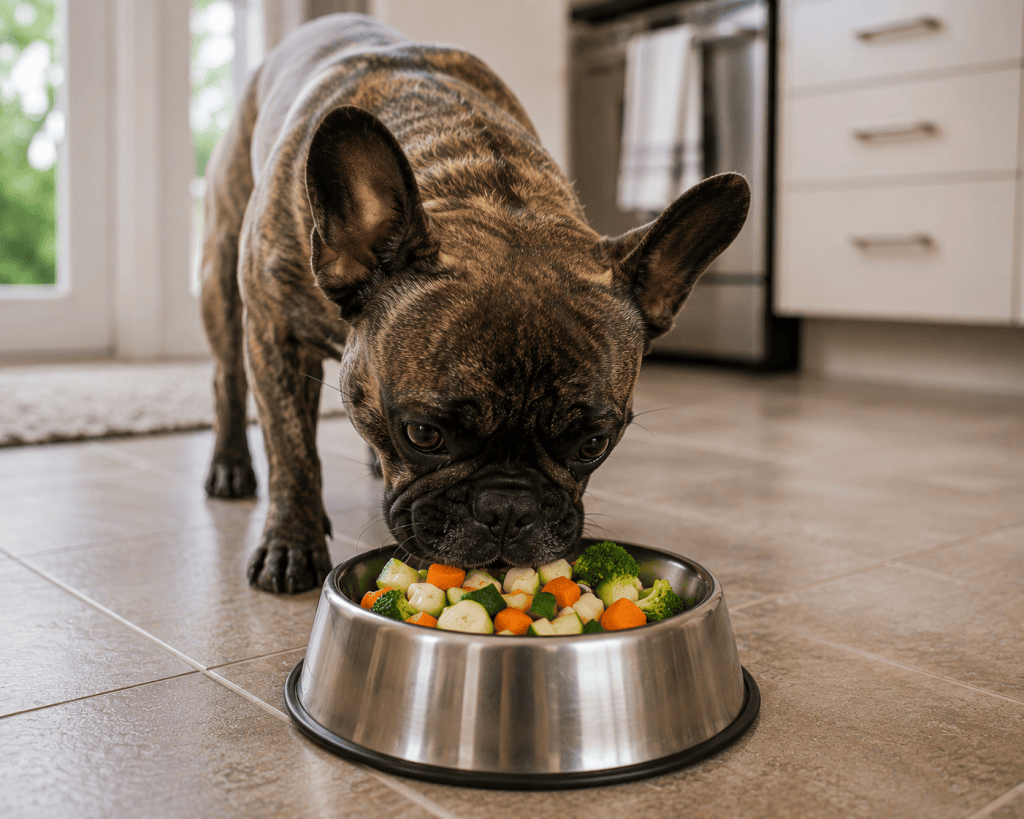
Steamed florets and stalk — lightly steam until just tender, allow to cool completely, cut into pieces, serve plain. The best option for puppies, seniors, and dogs with sensitive stomachs.
Mixed into regular food — a small amount of steamed broccoli mixed into your dog’s regular meal adds nutritional variety without any palatability issues.
As a training treat — small pieces of raw or steamed broccoli stalk work reasonably well as training treats for dogs who enjoy vegetables, though most dogs show less enthusiasm for broccoli than for meat-based or fruit-based rewards.
The Bottom Line
Broccoli is safe for dogs in strictly modest amounts — confirmed by the AKC and the PDSA as an acceptable occasional treat. The vitamin K, vitamin C, fibre, and dental benefits are real. The isothiocyanate caveat is equally real and should not be dismissed.
Keep broccoli well under 10% of your dog’s daily food intake, cut it into appropriate pieces every time, serve plain without any seasonings, and introduce gradually. Steamed is safer than raw for dogs new to broccoli or those with sensitive stomachs.
Think of it as a useful vegetable for occasional rotation rather than a treat to give freely — and your dog can enjoy the benefits without any of the digestive drama.
Frequently Asked Questions
Can dogs eat broccoli every day? Not recommended — the isothiocyanate content makes daily feeding inadvisable. A few times a week in small amounts is appropriate. Rotate with lower-risk vegetables like carrot and cucumber.
Is raw or cooked broccoli better for dogs? Steamed broccoli is the best option overall — easier to digest than raw, retains more nutrients than boiled, and reduces the gas risk. Raw broccoli stalk is a useful chewing treat but harder to digest than cooked.
Can dogs eat broccoli stalks? Yes — the stalks are lower in isothiocyanates than the florets and are generally better tolerated. Always cut into appropriately sized pieces to prevent choking.
Can dogs eat frozen broccoli? Yes, if plain and unseasoned. Thaw before serving — frozen broccoli is very hard and can pose a choking or dental risk if served completely frozen.
What if my dog ate a large amount of broccoli? Monitor for signs of digestive upset — vomiting, diarrhoea, gas, or lethargy. Mild symptoms should resolve within 24 hours. Contact your vet if symptoms are severe or persistent.
Can dogs eat broccoli with cheese sauce? No. Cheese sauce contains dairy, salt, and sometimes garlic or onion — none of which are appropriate for dogs. Only plain broccoli.
Sources:
- American Kennel Club — Can Dogs Eat Broccoli? Dr. Jerry Klein DVM, AKC Chief Veterinarian (akc.org): https://www.akc.org/expert-advice/nutrition/can-dogs-eat-broccoli/
- PDSA — Safe Fruit and Veg for Dogs — broccoli listed as a dog-safe vegetable in appropriate amounts (pdsa.org.uk): https://www.pdsa.org.uk/pet-help-and-advice/looking-after-your-pet/puppies-dogs/safe-fruit-and-veg-for-dogs
- Chewy — Can Dogs Eat Broccoli? Veterinary-reviewed content on isothiocyanate risks and safe serving guidance (chewy.com): https://www.chewy.com/education/dog/food-and-nutrition/can-dogs-eat-broccoli
Looking for vegetable treats with a simpler safety profile? Carrot and cucumber are good starting points — or browse our full Can Dogs Eat series for more guides on safe foods for dogs.