
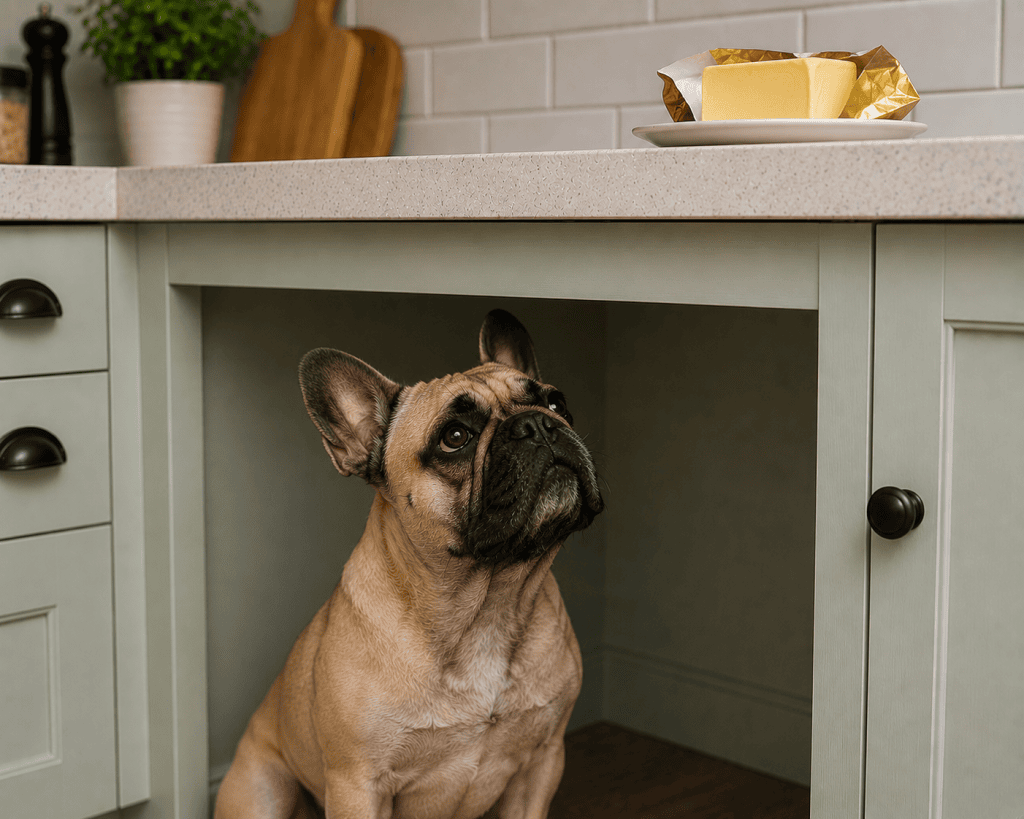
When wondering can dogs eat butter, there’s a huge difference between a little bit that drips off your toast compared to your pup, stealing a block off the table. No — dogs should not eat butter, and it is not a food you should deliberately share with your dog. Butter is not toxic in the way that grapes, xylitol, or garlic are, and a small lick from a piece of toast is unlikely to cause serious harm. But butter is essentially pure saturated fat with a meaningful lactose content, and it offers absolutely no nutritional benefit to dogs while creating real risks of digestive upset, obesity, and — in larger amounts or with regular exposure — pancreatitis.
Disclosure: This post contains affiliate links. As an Amazon Associate, we earn from qualifying purchases at no additional cost to you.
Table of Contents
Dr. Duncan Houston BVSc is direct on this point: butter isn’t poisonous to dogs, but that doesn’t make it a good idea. High in saturated fats and lactose, it can trigger digestive issues and contribute to long-term problems like obesity and pancreatitis.
Here’s the full picture.
What Is Butter and Why Is It a Problem for Dogs?
Butter is made almost entirely from milk fat — typically around 80% fat by weight, of which roughly half is saturated fat. The remainder is water and a small amount of milk solids, which contain lactose.
This composition creates two overlapping problems for dogs:
The fat problem — dogs’ digestive systems are not designed to process large amounts of fat efficiently, particularly saturated fat. When a dog consumes more fat than their system can handle, the pancreas is required to produce large amounts of digestive enzymes to process it. In dogs predisposed to pancreatic sensitivity, or when the fat load is simply too high, this can trigger pancreatitis — inflammation of the pancreas that ranges from mild and uncomfortable to severe and life-threatening.
The lactose problem — most adult dogs are lactose intolerant. Dogs produce the enzyme lactase as puppies to digest their mother’s milk, but lactase production typically declines significantly after weaning. Without adequate lactase, lactose passes undigested into the large intestine where gut bacteria ferment it — producing gas, bloating, loose stools, and diarrhoea. PetMD confirms that dogs can be lactose intolerant just like humans, and that a dog who is both fat-sensitive and lactose intolerant may be hit by both problems simultaneously after eating butter.
As SpectrumCare’s veterinary content notes: one tablespoon of butter contains around 12 grams of fat. That is more fat than most dogs should receive from a treat — from a single tablespoon of a substance that provides nothing of nutritional value.
The Pancreatitis Risk — Why It Matters
Pancreatitis is the most serious health concern associated with butter consumption in dogs, and it deserves detailed explanation because it’s a condition that progresses quickly and can become life-threatening.
The pancreas serves two functions: it regulates blood sugar through insulin production, and it produces digestive enzymes that break down fats, proteins, and carbohydrates. When a dog consumes a high-fat meal — like a significant quantity of butter — the pancreas is triggered to produce a large volume of digestive enzymes rapidly. In susceptible dogs, this process goes wrong: the enzymes begin activating inside the pancreas rather than in the small intestine, essentially causing the organ to start digesting itself.
Mild pancreatitis causes abdominal pain, loss of appetite, vomiting, and lethargy. Severe pancreatitis is a veterinary emergency — it can cause haemorrhage, organ failure, systemic infection, and death.
Dogs at highest risk of pancreatitis from butter include:
- Dogs with a previous history of pancreatitis
- Overweight or obese dogs
- Middle-aged and senior dogs
- Certain breeds including Miniature Schnauzers, Cocker Spaniels, and Yorkshire Terriers — which have documented higher pancreatitis susceptibility
- Dogs on high-fat diets already
Signs of pancreatitis typically appear within 24 to 72 hours of fat ingestion and include:
- Vomiting — often repeated
- Diarrhoea
- Abdominal pain — the dog may appear hunched, reluctant to move, or adopt a “prayer position” with front legs down and rear end raised
- Loss of appetite
- Lethargy
- Fever in more severe cases
If your dog shows these symptoms after eating butter, contact your vet immediately. Do not wait to see if things improve on their own — pancreatitis can deteriorate rapidly.
A Lick vs a Whole Stick — The Amount Matters
The practical response to butter ingestion depends significantly on how much was eaten:
A lick from a piece of toast or a finger: Very unlikely to cause serious harm in a healthy adult dog. Monitor for any digestive reaction over the following 24 hours. Mild loose stools are possible in lactose-sensitive dogs.
A tablespoon or two — medium or large dog: Monitor carefully for 48 to 72 hours. Digestive upset is likely. Contact your vet if symptoms develop or persist, or if your dog has a history of pancreatitis.
A tablespoon or two — small or toy breed: Contact your vet for guidance. Small dogs reach the problematic fat threshold much more quickly relative to their body weight.
A large amount — a significant portion of a block, or a dog who has eaten buttered baked goods: Contact your vet immediately. The fat load at this quantity is a meaningful pancreatitis risk for any dog regardless of size or prior health history.
Any amount — dog with known pancreatitis history: Contact your vet immediately. Dogs with prior pancreatitis are significantly more sensitive to high-fat foods and the threshold for triggering a repeat episode is much lower.
Salted vs Unsalted Butter — Does It Matter?
Yes — salted butter adds an additional layer of risk beyond the fat and lactose. PetMD confirms that salted butter is worse for dogs than unsalted: too much salt causes dehydration, excessive thirst and urination, and in serious cases sodium ion poisoning characterised by vomiting, diarrhoea, tremors, and seizures.
If your dog has eaten butter, knowing whether it was salted or unsalted is useful information to have when speaking to your vet. Unsalted butter removes one layer of concern — the fat and lactose problems remain.
Butter in Baked Goods and Cooked Food
This is where butter most often finds its way into dogs’ systems — not as a direct treat, but as an ingredient in human food that dogs steal or are given.
Buttered toast, croissants, pastries, biscuits, cakes, and most baked goods contain significant amounts of butter. These products add additional concerns beyond the butter itself:
Sugar — contributes to weight gain and dental decay, can cause blood sugar spikes.
Raisins or dried fruit — toxic to dogs and found in many baked goods including fruit loaf, hot cross buns, and some pastries.
Xylitol — used as a sweetener in some “reduced sugar” baked products. Highly toxic to dogs.
Chocolate — toxic to dogs, found in many cakes and biscuits.
Nutmeg — used in some baked goods, toxic to dogs in quantity.
Garlic or onion — used in savoury baked goods and pastries. Toxic to dogs.
The practical implication: when a dog steals a butter-containing baked good, it’s not just the butter you need to consider. Check what else was in the product and contact your vet if any of the above toxic ingredients were present.
What About Butter Alternatives?
Margarine — not recommended. Margarine contains similar fat levels to butter and many varieties include additives, artificial flavours, and sometimes xylitol. No safer than butter and potentially more dangerous.
Coconut oil — sometimes used in dog treat recipes and promoted as a healthy fat for dogs. Coconut oil is high in saturated fat — similar to butter in that regard — and should be used very sparingly if at all, and not for dogs prone to pancreatitis. Small amounts are generally tolerated better than butter due to the absence of lactose.
Peanut butter — the most widely used butter-style dog treat. Safe for most dogs when it’s plain, unsweetened, and xylitol-free. A much better option than dairy butter for coating pills, filling Kongs, or using as a flavour addition. Always check labels — xylitol appears in some “no added sugar” peanut butter products and is highly toxic to dogs.
Can Puppies Eat Butter?
No — puppies should not be given butter. Although puppies retain more lactase than adult dogs and can digest dairy more efficiently, the fat content is still inappropriate and the risk of digestive upset or pancreatitis from high-fat foods applies at any age. There is no appropriate reason to give butter to a puppy when better treat options exist.
Can Senior Dogs Eat Butter?
No — senior dogs are more prone to weight gain as activity levels decline, and more susceptible to pancreatitis as organ function becomes less resilient with age. Butter is an even poorer choice for older dogs than for young adults.
What to Do If Your Dog Ate Butter
- Assess how much was eaten and whether it was salted or unsalted. This information is useful for your vet.
- Check what else was in the food if the butter was part of a baked good or prepared dish.
- Remove any remaining butter from reach immediately.
- Ensure fresh water is available — particularly if salted butter was involved.
- Monitor for symptoms — vomiting, diarrhoea, lethargy, abdominal pain, loss of appetite — for 24 to 72 hours.
- Contact your vet if symptoms develop, if a large amount was eaten, if the dog has a history of pancreatitis, or if the butter was part of a product containing toxic ingredients.
The Bottom Line
Butter is not toxic to dogs — a small lick is not an emergency. But it is high in saturated fat, contains lactose that many adult dogs cannot properly digest, offers zero nutritional value, and creates real risks of digestive upset, obesity, and pancreatitis with regular or larger-quantity exposure. There is no situation in which butter is an appropriate deliberate treat for a dog.
If your dog has stolen a piece of buttered toast, monitor and move on. If they’ve helped themselves to a significant quantity, contact your vet. And if you’re looking for something to coat a pill or fill a Kong, reach for xylitol-free peanut butter instead.
Frequently Asked Questions
Is butter toxic to dogs? No — butter is not toxic in the way that grapes, xylitol, or chocolate are. However, its high fat and lactose content make it inappropriate as a regular treat and capable of causing serious health problems including pancreatitis in larger amounts.
My dog licked some butter — should I be worried? A small lick is unlikely to cause serious harm in a healthy adult dog. Monitor for any digestive reaction over the following 24 hours and contact your vet if symptoms develop.
Can dogs eat peanut butter instead? Yes — plain, unsweetened, xylitol-free peanut butter is a much safer alternative to dairy butter for dogs. Always check the label for xylitol before giving any peanut butter product to your dog.
Can dogs eat unsalted butter? Unsalted butter removes the sodium risk but retains the high fat and lactose content. It is marginally less risky than salted butter but still not recommended as a deliberate treat.
How much butter causes pancreatitis in dogs? There is no safe guaranteed threshold — susceptibility varies between individual dogs and depends on prior health history, weight, breed, and overall diet. Dogs with a history of pancreatitis can be triggered by relatively small amounts of fat. As a general principle, the less fat a dog consumes beyond their regular diet, the better.
Can dogs eat butter on toast? The toast itself in small amounts is unlikely to cause harm. The butter should not be deliberately given. If your dog ate buttered toast, monitor for digestive upset over the following 24 hours.
Sources:
- PetMD — Can Dogs Eat Butter? High saturated fat content, pancreatitis risk, and lactose intolerance in dogs (petmd.com): https://www.petmd.com/dog/nutrition/can-dogs-eat-butter
- Dr. Duncan Houston BVSc — Can Dogs Eat Butter? Vet-backed assessment: butter high in saturated fats and lactose can trigger digestive issues and contribute to obesity and pancreatitis (askavet.com): https://askavet.com/blogs/news/can-dogs-eat-butter-vet-backed-risks-facts-safe-alternatives
- Dial A Vet — Can Dogs Eat Butter? Risks and Vet Advice — veterinary guidance on butter ingestion and pancreatitis risk monitoring (dialavet.com): https://www.dialavet.com/blog/can-dogs-eat-butter
For safe treat alternatives with genuine nutritional value, browse our Natural Treats section — or head to our full Can Dogs Eat series for more guides on safe and unsafe foods for dogs.