The question are treats good for puppies comes up quickly for anyone raising a young dog. Treats can be incredibly helpful for training and building positive habits, but not every treat is suitable for a growing puppy. Understanding which ingredients are safe, how often to use treats, and what portion sizes support healthy development helps you make smart choices during those early learning stages.
Table of Contents
So, yes — treats are good for puppies when used correctly, and they play a genuinely important role in puppy development. Hill’s Pet, with guidance from Dr. Sarah J. Wooten DVM, confirms that treats can be part of a puppy pathway that leads to a lifetime of health and happiness. Purina’s expert team, citing the Cummings School of Veterinary Medicine at Tufts University, confirms that treats used as training rewards are an effective and appropriate part of puppy development.
The two key qualifications are moderation and appropriateness. Treats must stay within the 10% daily calorie limit to avoid displacing complete balanced nutrition during the critical growth period. And the treats themselves must be appropriate for a puppy’s developmental stage — soft enough for developing teeth, small enough to consume quickly, and free from ingredients that are harmful to puppies specifically.
Get those two things right and treats are not just acceptable for puppies — they are actively beneficial for training, bonding, dental development, and establishing lifelong positive associations.
When Can Puppies Start Having Treats?
The consistent answer across veterinary sources: from approximately 8 weeks of age, once a puppy has been fully weaned and has transitioned to solid food.
Hill’s Pet is specific: most veterinarians and other experts suggest waiting until a puppy is 8 weeks old to start offering treats. This aligns with the natural developmental timeline — puppies typically wean from approximately 3 to 4 weeks, with the transition to solid food completing around 6 to 8 weeks. By 8 weeks, the puppy’s digestive system is sufficiently developed to process appropriate solid treats.
Some trainers and vets suggest waiting until 12 weeks for training treats specifically — the point at which formal puppy training typically begins and when the puppy’s ability to associate reward with behaviour is more established. This is a reasonable approach if you are not using treats for anything other than training. For general introduction as occasional treats, 8 weeks is broadly considered appropriate.
Important note: Hill’s Pet recommends consulting your vet when selecting treats for puppies. A vet who knows your specific puppy’s breed, weight trajectory, and health history is best placed to advise on appropriate treat types and quantities.
The 10% Rule — Even More Important for Puppies Than Adult Dogs
The 10% daily calorie rule applies to dogs at all life stages, but it is especially important for puppies — and arguably harder to follow.
Hill’s Pet is direct: if your puppy needs to eat 200 calories per day, they should get no more than 20 calories in treats daily. The smaller the puppy, the smaller the daily calorie allowance, and therefore the smaller the absolute treat budget. A tiny puppy eating 150 calories per day has just 15 calories of treats per day — which is not many treats.
The WSAVA (World Small Animal Veterinary Association) specifically endorses the guideline that treats should not exceed 10% of daily calorie intake. The reason this matters particularly for puppies:
Growth and nutritional completeness — puppies require very specific nutritional ratios for healthy development: the right balance of calcium and phosphorus for bone development, appropriate protein for muscle growth, correct fat-to-carbohydrate ratios for energy, and the right vitamins for neurological and immune development. Complete, balanced puppy food is formulated to deliver this precisely. When treats displace puppy food calories, they displace nutritionally complete food in favour of something that typically provides less precise nutrition.
Developmental consequences of overfeeding — Hill’s Pet specifically flags abnormal growth as a risk of exceeding the 10% treat limit. In large and giant breed puppies especially, uneven growth driven by caloric excess can lead to developmental orthopaedic issues — joint problems that can affect quality of life permanently.
The kibble-as-treats solution — Hill’s Pet offers the most practical solution for the 10% challenge: you can reserve part of their daily kibble amount and hand-feed it as treats during training. This is an excellent approach, particularly for very small puppies with tight calorie budgets. The puppy receives a reward, training is reinforced, and no additional calories are added because the kibble is already part of the daily allowance. A genuinely clever and underused technique.


What Makes a Good Puppy Treat?
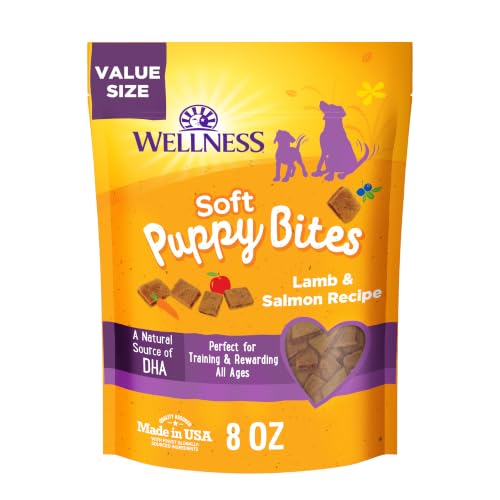
Hill’s Pet’s guidance from Dr. Wooten provides the clearest benchmark for training treats at 8 weeks: the best treats for an 8-week-old puppy should be soft, bite-sized, low in calories and high in protein.
The Cummings School of Veterinary Medicine at Tufts University, cited by Purina, adds the size benchmark: a good guide is to make sure the treat is no bigger than your smallest fingernail. This is the practical training treat size — small enough to be consumed quickly so the puppy refocuses on training rather than the treat, small enough to allow many repetitions within the calorie budget, and small enough not to fill the puppy up and reduce motivation.
Beyond size and calorie density, what genuinely makes a puppy treat good:
Appropriate Ingredients
Puppies require treats that are free from ingredients known to be harmful at any age — xylitol, garlic, onion, chocolate, grapes, raisins, macadamia nuts. These are the non-negotiables for dogs at any life stage. See our Are Dog Treats Healthy? guide for the complete ingredient list to avoid.
For puppies specifically, also avoid:
- Very high fat treats — puppies’ pancreases are developing and high fat loads can cause digestive upset
- Very high salt treats — developing kidneys are more sensitive to sodium overload
- Hard, crunchy treats requiring significant bite pressure — developing milk teeth cannot withstand the same pressure as adult teeth
High-Quality Protein as the Primary Ingredient
Protein is the most important macronutrient for puppies. Treats with named, high-quality protein — chicken, lamb, salmon, beef — as the first ingredient are consistently preferable to those leading with carbohydrate fillers. The protein supports muscle development and provides a more nutritionally worthwhile calorie contribution than carbohydrates.
AAFCO “All Life Stages” or “Puppy” Labelling
The Association of American Feed Control Officials (AAFCO) governs nutritional adequacy claims on pet food and treats. A treat labelled as appropriate for “all life stages” or specifically for “puppies” has met AAFCO’s nutritional standards for the developmental stage. Treats labelled only for “adult maintenance” are formulated for adult dogs and may not have the appropriate calcium-phosphorus ratios for a growing puppy.
This does not mean adult treats are dangerous — many plain, single-ingredient natural treats are appropriate at any life stage. But when choosing formulated treats, check for appropriate life-stage labelling.
Soft Texture for Developing Teeth
Puppies begin losing their milk teeth and growing permanent teeth from approximately 12 weeks, with the process continuing until around 6 months. During this period, hard treats that require significant biting pressure can cause discomfort, dental damage, or simply frustrate a teething puppy. Soft, yielding treats are the appropriate texture for young puppies. After the adult teeth are fully established — generally by 6 months — harder treats can be introduced gradually.
Treats by Purpose — The Main Use Cases for Puppies
Training Treats — The Primary Use
This is the most important and most beneficial use of treats for puppies. Positive reinforcement training using treats as rewards is the most evidence-based approach to puppy training, supporting the development of commands including sit, stay, recall, leave it, and loose lead walking. The earlier a puppy learns to associate good behaviour with reward, the more established those behaviours become.
Purina’s Tufts-cited guidance is valuable here: once your puppy has learned the command or desired behaviour, you can gradually phase out the treats in favour of praise alone. This is an important point that many puppy owners miss — treats are most valuable as a training aid during the learning phase, not as a permanent fixture for every successful command forever. Progressive reduction of treats in favour of verbal praise and play rewards is part of good training practice.
Practical training treat advice:
- Fingernail-sized pieces — no bigger
- Consume in 2-3 seconds — keeps training momentum
- 2-5 minute training sessions for young puppies — short attention spans
- Multiple repetitions per session using the small pieces
- Account for all training treat calories in the daily 10% budget
- Consider kibble-as-treats for puppies with very small calorie budgets
Bonding and Affection
Hand-feeding treats builds positive associations with human hands and with being close to people — valuable for puppies at any age, and particularly useful for puppies who are initially cautious around new people. The act of a new family member hand-feeding treats to a puppy is one of the quickest ways to establish trust.
Dental Health — The Right Age Matters
Dental chews become appropriate for puppies from approximately 6 months, once the adult teeth are established. Before 6 months, the developing and transitioning teeth are not ready for hard dental chews, and the chewing mechanics are not yet efficient enough to derive the intended dental benefit. From 6 months onwards, VOHC-approved dental chews can begin to play a role in establishing dental health habits.
For younger puppies who want to chew, softer natural options — small bully stick pieces, appropriate-sized beef gullet strips, soft dried fish skins — provide the chewing satisfaction and some dental benefit without the tooth fracture risk of hard chews. See our Chews & Bones section for our puppy-appropriate chew recommendations.
Enrichment and Lick Mat Use
Lick mats and appropriate Kong-filling treats provide mental enrichment that is genuinely valuable for puppies. The licking behaviour is naturally calming — useful for settling an over-excited puppy, providing calm activity during rest periods, and occupying a puppy safely when you need them settled. Plain Greek yogurt (xylitol-free), plain pumpkin puree, or mashed banana are all appropriate lick mat fillings for puppies and provide nutritional value alongside the enrichment benefit.

Natural Treats for Puppies — The Advantage
This is where natural, single-ingredient treats genuinely stand out for puppies. When you give a puppy a piece of plain dried chicken breast, a small piece of air-dried salmon, or a sardine flake — the ingredient list is transparent and the protein source is identifiable. You know exactly what you are giving.
Compared to multi-ingredient commercial treats with long ingredient lists, artificial preservatives, and added sugars, natural treats:
- Have transparent, verifiable ingredients
- Provide genuine protein value from named sources
- Avoid the preservatives and additives that developing puppies’ systems do not need
- Are naturally portionable to any size needed
- Typically carry lower allergy risk given the single-ingredient profile
The natural treats most appropriate for puppies:
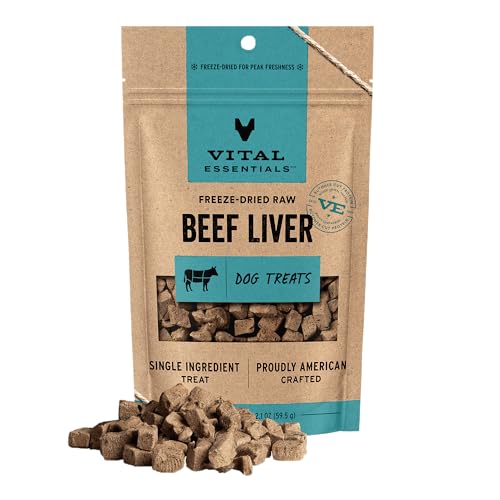
- Small pieces of air-dried or freeze-dried chicken, beef, or fish — high protein, no additives, easy to portion to fingernail size
- Dried fish skins (small pieces) — omega-3 rich, soft enough for developing teeth, highly palatable
- Plain cooked chicken breast (fresh) — the classic high-value training reward, no additives, lean protein
- Small pieces of appropriate natural chews — beef gullet, small bully stick sections — once teeth are adequate (generally 12 weeks minimum for any chew product)
Treats to avoid for puppies:
- High-fat treats (cheese, bacon, fatty meat) — too rich for developing digestive systems
- Very hard treats (antler, hard biscuits) — tooth fracture risk on developing teeth
- Honey — no raw honey for puppies under 12 months due to botulism spore risk
- Treats with artificial preservatives, colours, or sweeteners
See our Puppy Treats section for our independently reviewed recommendations.
Age-Specific Treat Guidelines at a Glance
8 weeks onwards:
- Soft, small training treats appropriate
- Fingernail size maximum
- Kibble-as-treats is an excellent approach at this age
- 10% daily calorie limit strictly applied
- Plain, simple single or minimal-ingredient treats
12 weeks onwards:
- Formal training typically begins — treat-based positive reinforcement is highly effective
- Small natural chew options can be introduced (supervised)
- Still soft-texture preference
- Begin introducing variety of treat types gradually
6 months onwards:
- Adult teeth established — harder treats can begin to be introduced
- Dental chews now appropriate
- Training treats can begin to be phased toward praise-based rewards for established commands
- Treat variety can expand significantly
12 months:
- Transitioning to adult dog treat guidelines
- Most breeds considered adult at 12 months (large/giant breeds may continue to develop to 18-24 months)
- Raw honey now appropriate (previously withheld due to botulism spore risk)
The Bottom Line
Yes, treats are good for puppies — with the right approach. They support training, bonding, dental development at appropriate ages, and enrichment. The 10% daily calorie rule is non-negotiable. Soft, small, high-quality treats from identifiable protein sources are the right choice. Natural single-ingredient treats give you full transparency over what you are giving a developing puppy’s system.
The treats themselves are not the problem. The problem is poor treat selection, excessive treat use that displaces balanced nutrition, and giving treats with no purpose beyond immediate gratification. With intention and knowledge, treats are one of the best tools you have in a puppy’s first year.
Frequently Asked Questions
Are treats good for puppies? Yes — when appropriate treats are given in moderation within the 10% daily calorie limit. They support training, bonding, dental development, and enrichment. Complete, balanced puppy food remains the nutritional foundation.
When can puppies start having treats? From approximately 8 weeks of age, once fully weaned and transitioned to solid food. Most veterinary sources including Hill’s Pet confirm 8 weeks as the appropriate starting point.
How many treats can a puppy have per day? No more than 10% of daily calorie intake. For small puppies on 150-200 calories per day, this is 15-20 calories of treats — very few. Consider using kibble as training treats to stay within this limit.
What size should training treats be for puppies? No bigger than your smallest fingernail — the Cummings School of Veterinary Medicine at Tufts University benchmark cited by Purina. Small enough to consume in 2-3 seconds.
Can puppies have natural treats? Yes — soft, single-ingredient natural treats from high-quality protein sources are among the best treat options for puppies. Air-dried chicken, freeze-dried fish, and small pieces of natural chews are appropriate from 8 to 12 weeks onwards depending on the specific product.
When can puppies have dental chews? From approximately 6 months, once adult teeth are established. Before this age, developing and transitioning teeth are not ready for hard dental chews.
Sources:
- Hill’s Pet — Dr. Sarah J. Wooten DVM: most vets suggest waiting until 8 weeks to start treats; best treats should be soft, bite-sized, low in calories and high in protein; the 10% treat rule is important to avoid overfeeding, obesity, abnormal growth, and nutritional imbalances; kibble hand-fed as treats is an excellent approach for puppies with tight calorie budgets (hillspet.com): https://www.hillspet.com/dog-care/nutrition-feeding/can-puppies-have-treats
- Purina — citing Cummings School of Veterinary Medicine at Tufts University: treat no bigger than smallest fingernail; puppy can eat quickly so they don’t lose track of training lesson; once puppy has learned the command, gradually phase out treats in favour of praise (purina.com): https://www.purina.com/articles/dog/puppy/feeding/can-puppies-have-treats
- PetMD — Dr. Brittany Kleszynski DVM: treats can be healthy for dogs if given in moderation; training treats are typically small, similar in size to a pencil eraser, lower in calories because the manufacturers know pet parents will use many at a single time (petmd.com): https://www.petmd.com/dog/nutrition/are-treats-good-for-dogs
- World Small Animal Veterinary Association (WSAVA) — treats should not exceed 10% of daily calorie intake guideline; nutritional guidelines for complete and balanced pet food (wsava.org)
- Association of American Feed Control Officials (AAFCO) — life stage nutritional adequacy claims for pet food and treats; all life stages and puppy labelling standards (aafco.org)
For natural treat recommendations specifically for puppies, browse our Puppy Treats section — or head to our Are Dog Treats Healthy? blog guide for the complete ingredient checklist for choosing quality treats. Browse our Can Dogs Eat series for guides on specific safe and unsafe foods for dogs at all life stages.