
The question Can Dogs Eat Cheddar Cheese comes up often because cheddar is one of the most common cheeses in the kitchen. While many dogs enjoy the taste, cheddar cheese isn’t always the best choice for every pup. Factors like lactose sensitivity, fat content, and portion size all play a role in whether cheddar is a safe treat or something to avoid.
Yes — cheddar is one of the more appropriate cheeses you can give a dog, and it is one of the most widely used training treats in the UK for good reason. The AKC confirms cheese can be a great treat for dogs, and mature cheddar in particular sits in the lower-lactose category — the long ageing process converts much of the lactose present in fresh cheese, making it more tolerable for adult dogs than younger, softer cheese varieties.
Table of Contents
That said, cheddar is still high in fat and calories, which means portion control matters. And like all cheese, it is not appropriate for dogs with pancreatitis, significant weight issues, or known dairy sensitivity.
For the complete guide to cheese for dogs — including all cheese types, the blue cheese warning, lactose intolerance testing, and full portion guidance — see our Can Dogs Eat Cheese? article. This page covers everything specific to cheddar.
Why Cheddar Works Well as a Dog Treat
Cheddar has a few properties that make it particularly practical as a dog treat compared to other cheeses:
Lower lactose than mild or fresh cheeses — the ageing process in mature cheddar converts much of the lactose through bacterial activity. Mature (or extra mature) cheddar is meaningfully lower in lactose than mild cheddar, cream cheese, or fresh cheeses like ricotta. For dogs with moderate lactose sensitivity, mature cheddar is often better tolerated than younger varieties.
Strong smell — cheddar’s fermented, fatty aroma is highly stimulating to dogs’ acute sense of smell. This makes it an effective high-value training reward, particularly in distracting environments or for recall training where you need something compelling.
Easy to cut into small pieces — unlike soft cheeses, cheddar can be cut into precise, consistently sized cubes — important for training where portion control and speed of delivery matter.
Widely available and affordable — every UK supermarket stocks mature cheddar. It requires no special sourcing and is one of the most cost-effective high-value training treats available.
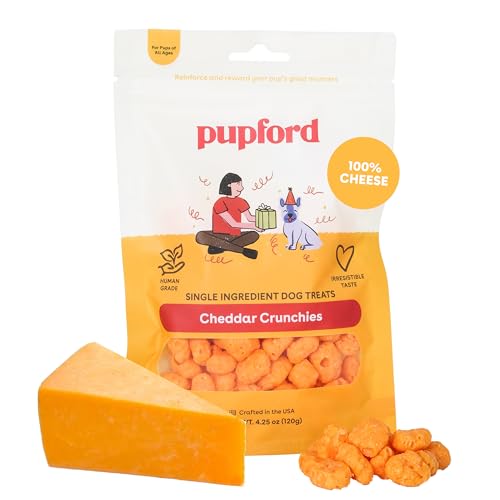


Mild vs Mature Cheddar — Which Is Better for Dogs?
Mature or extra mature cheddar — the better choice for dogs. The longer ageing process reduces lactose content and intensifies the flavour, meaning you need a smaller piece to achieve the same training motivation. Lower lactose means lower digestive risk.
Mild cheddar — higher in lactose than mature varieties. Still appropriate in small amounts for dogs without known dairy sensitivity, but if your dog tends towards digestive sensitivity after dairy, mature cheddar is the more sensible option.
Smoked cheddar — generally not recommended. Smoking adds flavourings and potentially salt above the natural cheddar level. Plain unsmoked varieties are preferable.
Flavoured cheddar (red Leicester with onion, Stilton mixed cheddar, garlic and herb) — never. Onion and garlic are toxic to dogs and damage red blood cells. Any cheddar flavoured or mixed with allium vegetables must never be given to dogs.

How Much Cheddar Can a Dog Have?
Cheddar is calorie-dense — a 30g serving contains around 120 calories. Portion control is essential.
For training use, the ideal piece size is roughly 1cm cubed — pencil-eraser sized. This is enough for the dog to register the taste and smell reward without consuming meaningful calories from a single piece.
As training treats:
- Use pencil-eraser-sized cubes — 1cm or smaller
- No more than 5 to 10 pieces per training session
- Account for training treat cheese in the day’s overall 10% treat allowance
As an occasional standalone treat:
- Small dogs (under 10kg) — one small 1cm cube, a few times a week at most
- Medium dogs (10–25kg) — 1 to 2 small cubes, a few times a week at most
- Large dogs (over 25kg) — 2 to 3 small cubes, a few times a week at most
Never give cheddar daily. The fat content accumulates and creates pancreatitis risk with frequent feeding. Cornell University College of Veterinary Medicine identifies high-fat dietary exposure as a primary cause of pancreatitis — one of the most common gastrointestinal emergencies in dogs.
Cheddar for Hiding Medication
Plain mature cheddar is one of the most effective pill-hiding vehicles available. A small piece of cheddar moulded around a tablet is accepted readily by most dogs who would otherwise resist direct pilling.
For this purpose, the amount involved is negligible — just enough to conceal the pill. This is appropriate even for dogs who should otherwise limit cheese intake, as the quantity is so small that neither fat nor lactose is a meaningful concern. The practical benefit of successful medication administration outweighs the negligible risk of a pea-sized piece of cheddar.
Dogs Who Should Avoid Cheddar
Dogs with pancreatitis history — cheddar’s fat content makes it inappropriate for any dog with a prior pancreatitis episode. Even small amounts of high-fat food can trigger a repeat episode in susceptible dogs.
Overweight dogs — cheddar’s calorie density makes it a poor treat choice for dogs on calorie-restricted diets. Lower-calorie alternatives like plain cooked chicken breast, carrot pieces, or cucumber deliver the treat reward without the calorie load.
Dogs with known dairy/lactose sensitivity — if your dog shows gas, bloating, loose stools, or vomiting after any dairy product, cheddar should be avoided. There are effective cheese alternatives (see below) and many non-dairy high-value treats that work equally well.
Dogs on sodium-restricted diets — cheddar contains moderate natural sodium. For dogs with heart disease, kidney disease, or conditions requiring low sodium, cheese should be cleared with your vet first.
Miniature Schnauzers, Cocker Spaniels, and Yorkshire Terriers — breeds with documented elevated pancreatitis susceptibility should have cheddar strictly limited or avoided.

Signs Your Dog Doesn’t Tolerate Cheddar
Watch for these in the 12 to 24 hours after giving cheddar:
- Gas or flatulence
- Loose stools or diarrhoea
- Bloating or visible abdominal distension
- Vomiting
- Lethargy or abdominal discomfort
Gas and loose stools suggest lactose intolerance. Lethargy and abdominal pain alongside vomiting suggest fat-related digestive upset or early pancreatitis — contact your vet if these symptoms develop.
If your dog shows any of these reactions, stop cheddar immediately. Switch to a lower-lactose, lower-fat alternative or a non-dairy high-value treat going forward.
Non-Dairy Alternatives to Cheddar as Training Treats
For dogs who cannot tolerate cheddar but need a high-value motivator, the following work well:
Plain cooked chicken breast — diced into small cubes, lean, high protein, almost universally motivating. The go-to alternative to cheese for most trainers.
Air-dried liver treats — naturally very high value, intense smell, appropriate fat levels for training use. Available in small pieces ideal for training.
Freeze-dried meat treats — single ingredient, high protein, intense smell. Particularly effective for dogs motivated by meat rather than dairy.
Hot dog alternative — if you need something soft and smelly, plain cooked chicken sausage made for dogs without garlic or onion is a safer option than cheese for lactose-sensitive dogs. See our Can Dogs Eat Hot Dogs? guide for why human hot dogs are not appropriate.
Browse our Training Treats section for our independently reviewed recommendations across all high-value treat options.
The Bottom Line
Mature cheddar is one of the more appropriate cheeses for dogs — lower in lactose than younger varieties, strong smelling, easy to portion, and effective as a high-value training treat. The AKC endorses cheese as a great dog treat, and cheddar’s specific properties make it one of the better cheese choices.
Keep pieces small, use mature rather than mild, never use flavoured varieties containing garlic or onion, and account for the calorie and fat content in your dog’s overall daily allowance. For dogs with pancreatitis history, significant weight issues, or known dairy sensitivity — choose a non-dairy alternative instead.
Frequently Asked Questions
Can dogs eat cheddar cheese? Yes — plain, unflavoured cheddar in small amounts is safe for most healthy adult dogs. Mature cheddar is preferable to mild due to its lower lactose content.
Is mature cheddar better than mild cheddar for dogs? Yes — the ageing process reduces lactose content in mature cheddar, making it more tolerable for adult dogs with moderate dairy sensitivity.
How much cheddar can I give my dog for training? Pencil-eraser sized cubes (around 1cm) — no more than 5 to 10 per training session. Account for them in the day’s overall 10% treat allowance.
Can dogs eat smoked cheddar? Not recommended — smoked cheddar contains additional flavourings and potentially higher salt. Plain, unsmoked cheddar is the better choice.
Can dogs eat flavoured cheddar with garlic or onion? Never — garlic and onion are toxic to dogs. Any cheddar flavoured or mixed with allium vegetables must not be given to dogs under any circumstances.
What if my dog shows digestive upset after cheddar? Stop cheddar immediately. Gas, loose stools, and bloating suggest lactose intolerance. Lethargy and abdominal pain suggest fat-related digestive upset. Contact your vet if symptoms are severe or persist beyond 24 hours.
Sources:
- American Kennel Club — cheese can be a great treat for dogs; cottage cheese and other lower-lactose cheeses are among the safer options; dogs with pancreatitis should avoid cheese (akc.org): https://www.akc.org/expert-advice/nutrition/can-dogs-eat-cheese/
- PetMD — Dr. Sandra C. Mitchell DVM, DABVP: small amounts of certain cheeses are safe for most dogs; many dogs are lactose intolerant; pancreatitis dogs should not eat cheese (petmd.com): https://www.petmd.com/dog/nutrition/can-dogs-eat-cheese
- Cornell University College of Veterinary Medicine — pancreatitis is one of the most common gastrointestinal emergencies in dogs; high-fat dietary exposure is a primary cause (vet.cornell.edu)
- ASPCA Animal Poison Control Center — garlic and onion (allium family) classified as toxic to dogs; cause oxidative damage to red blood cells and haemolytic anaemia (aspca.org)
For the complete guide to cheese for dogs — including all cheese types, the blue cheese warning, and full portion guidance — see our Can Dogs Eat Cheese? article. For high-value training treat alternatives, browse our Training Treats section — or head to our full Can Dogs Eat series.