
The answer to this question depends entirely on two things: what type of bone, and how it’s been prepared. Get those right and bones can be a genuinely valuable part of a dog’s diet and enrichment routine. Get them wrong and the consequences can be severe — internal lacerations, intestinal blockages, broken teeth, and in the worst cases, death.
Disclosure: This post contains affiliate links. As an Amazon Associate, we earn from qualifying purchases at no additional cost to you.
Table of Contents
The headline rules are straightforward: raw bones — generally yes, with conditions. Cooked bones — never, without exception. Everything else is detail, and the detail matters.
This is also a topic where the veterinary community is more divided than most. PetMD and the San Francisco SPCA take the position that no bones of any kind should be given to dogs. The AKC and the majority of veterinary practices take the view that raw bones, given under the right conditions, are appropriate and beneficial. We’ll present both positions honestly so you can make an informed decision for your own dog.
Why Cooked Bones Are Never Safe
This is the non-negotiable part of the bone conversation. Cooked bones should never be given to dogs — ever. This is a position of complete veterinary consensus across every authoritative source.
Cooking changes the molecular structure of bone. Raw bone has a degree of flexibility and resilience. Cooked bone becomes brittle and dry — it doesn’t bend under pressure, it shatters. When a dog chews a cooked bone, it doesn’t wear down gradually. It breaks into sharp, jagged shards.
Those shards can:
Lacerate the mouth and gums — causing pain, bleeding, and infection even before the bone is swallowed.
Become lodged in the throat or oesophagus — a choking emergency that can prevent breathing and require emergency endoscopic removal or surgery.
Puncture the stomach or intestinal wall — sharp bone fragments that penetrate the gut wall cause internal bleeding, infection, and peritonitis. This is a life-threatening emergency that requires immediate surgery and carries a high mortality rate even with prompt treatment.
Cause intestinal blockage — bone fragments that don’t perforate the gut can still accumulate and block the digestive tract, causing a painful obstruction that again requires surgical intervention.
Constipation — bone fragments that pass further through the digestive system but don’t cause acute blockage can still cause severe constipation from calcium accumulation.
The types of cooked bone that cause the most serious injuries are:
- Cooked chicken and turkey bones — the most common cause of bone-related veterinary emergencies. These bones are small, hollow, and splinter easily into razor-sharp shards
- Cooked pork bones — particularly ribs and chop bones, which splinter similarly to poultry bones
- Cooked T-bones and steak bones — the T-shape can become lodged with one end in the throat and the other down the oesophagus, causing severe swelling that blocks the airway
- Any small cooked bone — the smaller the bone, the higher the risk of lodging in the throat
The rule is absolute: if a bone has been boiled, roasted, grilled, baked, smoked, or cooked in any way, it is not safe for a dog. This includes bones from your dinner plate, bones cooked inside a casserole or stew, and smoked bones from pet shops.
Raw Bones — The Nuanced Picture
Raw bones are a different proposition to cooked ones. Raw bone retains its natural moisture and flexibility, which means it compresses and wears down under chewing pressure rather than shattering into shards. This is why the BARF (Biologically Appropriate Raw Food) and raw feeding communities have long included raw meaty bones as a central component of their approach — and why the AKC acknowledges that some veterinarians suggest raw meat bones for dogs.
However — and this is important — raw bones are not without risk. The AKC is clear that even raw bones can cause tooth fractures, gum lacerations, and bone splinters in certain circumstances. PetMD takes the more conservative position that the risks of raw bones are not justified by the nutritional benefits given the availability of safer alternatives.
The honest position, informed by years of experience with natural and raw feeding, is this: raw bones given under the right conditions, to the right dogs, with appropriate supervision, are beneficial. Raw bones given carelessly are dangerous.
Benefits of Raw Bones
Dental health — chewing raw bone is one of the most effective natural methods of removing plaque and tartar from dogs’ teeth. The mechanical abrasion is more effective than most commercial dental treats. Chewing stimulates saliva production, which contains enzymes that further inhibit bacterial plaque formation.
Mental stimulation — chewing is a naturally satisfying behaviour for dogs. A raw bone provides sustained enrichment that reduces boredom-related behaviours including destructive chewing, excessive barking, and paw licking.
Nutritional value — raw meaty bones provide calcium, phosphorus, collagen, and protein from the meat and connective tissue attached. These nutrients are in a highly bioavailable form that differs meaningfully from the processed calcium in commercial dog food.
Jaw exercise — chewing works the jaw muscles, which contributes to dental and muscular health over time.
Psychological satisfaction — for dogs who are food-motivated or prone to anxiety, a raw bone provides a focused, calming activity.
The Rules for Giving Raw Bones Safely
If you decide to give your dog raw bones, these rules are not optional — they are the difference between a beneficial experience and a veterinary emergency:
Rule 1: Always Raw, Never Cooked
Already covered — but worth repeating as the first and most important rule. If it’s been cooked in any way, it doesn’t go near your dog.
Rule 2: Size Matters — Always
The bone must be large enough that your dog cannot fit it entirely in their mouth. Veterinary guidance consistently recommends bones roughly the size of your dog’s head. A bone that can be swallowed whole is a blockage waiting to happen. A bone with a T-shape or narrow section that can get wedged across the jaw or throat is equally dangerous.
Large breed dogs need large bones — beef femur bones, marrow bones, and knuckle bones from cattle are appropriate. Small breeds need correspondingly smaller options — raw chicken wings or necks are appropriate for small dogs in a way that beef femur bones are not for a Chihuahua.
Rule 3: Always Supervise
Never leave a dog unsupervised with a bone. Ever. The moment you leave the room, the safety calculus changes entirely. Supervision means you can intervene if the dog starts gulping large pieces, if the bone splinters unexpectedly, or if the dog shows signs of distress.
Rule 4: Time Limit — 10 to 15 Minutes
Multiple veterinary sources recommend limiting bone chewing sessions to 10 to 15 minutes at a time. After that, remove the bone and refrigerate it. Extended chewing sessions increase the risk of tooth fracture, digestive overload from bone consumption, and constipation.
Rule 5: Refrigerate and Discard Promptly
Raw bones carry bacteria including Salmonella and E. coli — both on the bone surface and from the meat attached. After each chewing session, the bone goes back in the refrigerator. After three to four days maximum, it goes in the bin. Never leave a raw bone out at room temperature for extended periods.
Rule 6: Never Give a Bone Alongside Another Dog
Even the friendliest dogs can become unpredictably possessive and aggressive around bones. If you have multiple dogs, bones should only ever be given to one dog at a time, in a separate space, with full supervision.
Rule 7: Match the Bone to the Dog
Some dogs are not good candidates for bone chewing at all — regardless of bone type. Dogs who gulp food without chewing, aggressive chewers who power through bones quickly, dogs with existing dental work or crowns, puppies with developing teeth, and very old dogs with weakened teeth should all have bone-giving discussed with a vet before proceeding. The appropriate bone for a young adult Border Collie who chews carefully is very different from the appropriate approach for a power-chewing Rottweiler.

Which Raw Bones Are Best?
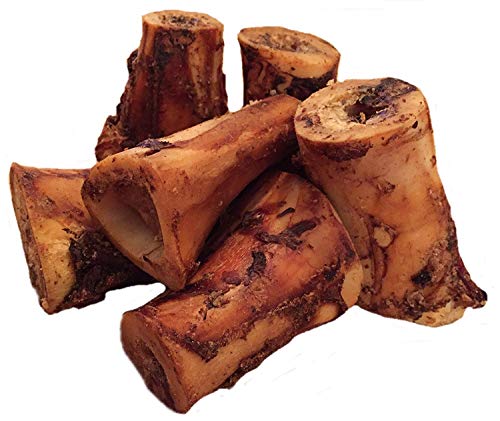
Recreational bones (marrow bones, femur bones) — large beef or bison bones that are too big to be consumed quickly. Good for larger breeds, primarily for the chewing and dental benefit. The marrow inside is rich but high in fat — dogs who are prone to pancreatitis should have marrow scooped out before the bone is given. Read about Marrow Bones for dogs here.
Raw meaty bones (chicken wings, necks, carcasses) — these are the bones most associated with the BARF and raw feeding approach. Soft enough to be chewed and consumed, they provide complete nutritional value including meat, bone, and connective tissue. Appropriate sizes for smaller dogs. Always raw — never cooked.
Lamb bones — raw lamb ribs and neck bones are a popular option. Softer than beef, more manageable for medium breeds.
Pork bones — raw pork bones are generally considered higher risk than beef or lamb due to their tendency to splinter even when raw. Most raw feeding guidance recommends avoiding raw pork bones.



The Veterinary Debate — Both Sides Fairly Presented
It’s worth being honest about the fact that veterinary opinion on raw bones is not uniform.
The pro-raw-bone position (AKC, most raw feeding veterinary advocates): Raw bones are a natural part of a dog’s diet, provide genuine dental and nutritional benefits, and are safe when given correctly. The risks are manageable with supervision and appropriate bone selection. Dogs have been consuming raw bones for thousands of years.
The anti-all-bones position (PetMD, San Francisco SPCA, some emergency veterinary practices): Even raw bones pose risks including bacterial contamination, tooth fracture, and unexpected splintering. The nutritional benefits can be obtained from safer sources, and the dental benefits from VOHC-approved dental chews. Emergency vets see bone-related injuries regularly and believe the risks are not justified.
Both positions are held by qualified veterinary professionals. The difference often comes down to whether a vet’s primary experience is with the benefits of raw feeding or with the emergency cases that arise when bones go wrong.
Our position at Natural Dog Treats Guru, informed by years of hands-on experience with natural feeding: raw bones given correctly are beneficial. The key word is correctly. The rules above are not guidelines — they are the conditions under which raw bone giving is appropriate. Ignore them and the anti-bone vets are right.
What If My Dog Ate a Cooked Bone?
Do not induce vomiting — bone fragments could cause additional damage on the way back up.
Small amount, large dog, no symptoms: Contact your vet for guidance. Monitor closely for 48 to 72 hours for any signs of distress.
Any amount, small dog: Contact your vet immediately.
Any dog showing symptoms — vomiting, blood in stool, lethargy, abdominal pain, difficulty defecating, drooling, pawing at mouth: Emergency. Contact your vet or emergency animal hospital immediately. Do not wait.
Natural Chew Alternatives
For dog owners who prefer not to give bones — or whose dog is not a good candidate for bone chewing — the natural chew market offers excellent alternatives that provide similar dental and enrichment benefits without the risks:
Bully sticks — fully digestible, long-lasting, high protein. One of the most popular natural bone alternatives.
Yak chews — extremely hard-wearing, fully digestible, no smell. Excellent for aggressive chewers.
Antler chews — naturally shed antlers. Very long-lasting, no processing required. Best for powerful chewers — too hard for some dogs and can cause tooth fractures if the dog is a very aggressive chewer.
Dried fish skins — softer option, fully digestible, rich in omega-3s.
Root chews (olive wood, coffee root) — completely natural, no animal products, long-lasting.
We cover all of these in detail in our Chews & Bones section with specific product recommendations for different sizes and chewing styles.
The Bottom Line
Can dogs eat bones? Raw bones — yes, under the right conditions, with the right supervision, and with the right bone for your dog’s size and chewing style. Cooked bones — never, without exception, regardless of type or size.
The distinction is critical and the rules are not flexible. Follow them and bone chewing is a genuinely enriching, nutritionally valuable experience for your dog. Ignore them and you’re rolling the dice on a veterinary emergency.
When in doubt, the natural chew alternatives listed above provide comparable benefits without the same risk profile — and for many dog owners, that’s the more practical choice.
Frequently Asked Questions
Can dogs eat cooked chicken bones? No — cooked chicken bones are among the most dangerous for dogs. They splinter easily into sharp shards that can lacerate the mouth, throat, and digestive tract. Never give cooked chicken bones under any circumstances.
Can dogs eat raw chicken bones? Raw chicken wings and necks are used by raw feeders as an appropriate meaty bone for dogs. They must always be raw — never cooked — and given under supervision. Always consult your vet before introducing raw meaty bones, particularly for dogs new to raw feeding.
Can dogs eat lamb bones? Raw lamb bones — yes, in appropriate sizes for your dog. Cooked lamb bones — never.
Can dogs eat pork bones? Raw pork bones carry a higher splinter risk than beef or lamb even when raw. Most raw feeding guidance recommends avoiding pork bones. Cooked pork bones — never.
What should I do if my dog swallowed a cooked bone? Do not induce vomiting. Contact your vet immediately for guidance. Monitor for vomiting, blood in stool, lethargy, abdominal pain, or difficulty defecating — seek emergency care immediately if any of these develop.
Are smoked bones from pet shops safe? No — smoked bones have been cooked, which makes them brittle and prone to splintering. Despite being sold in pet shops, smoked bones carry the same risks as other cooked bones.
Sources:
- American Kennel Club — Can Dogs Eat Bones? Veterinary guidance on raw vs cooked bone safety, supervised bone giving rules (akc.org): https://www.akc.org/expert-advice/nutrition/can-dogs-eat-bones/
- PetMD — Can Dogs Eat Bones? Position that bones of any kind are not recommended due to risk profile (petmd.com): https://www.petmd.com/dog/nutrition/can-dogs-eat-bones
- San Francisco SPCA — What Bones Can Dogs Eat? Modern veterinary knowledge shows bones can cause serious and life-threatening injuries (sfspca.org): https://www.sfspca.org/blog/what-bones-can-dogs-eat/
- Royal Veterinary College (RVC) — guidance on gastrointestinal foreign body emergencies including bone fragments in dogs (rvc.ac.uk)
For safe natural chew alternatives that provide comparable dental and enrichment benefits, browse our Chews & Bones section — or see our guides on bully sticks, yak chews, and antler chews for specific recommendations.