
This is one of the most genuinely divided questions in canine bone safety — and it requires honest, careful treatment rather than a simple yes or no. The short answer: cooked beef rib bones — never. Raw beef rib bones — a significantly more complex picture than most other raw bones.
Table of Contents
PetMD, reviewed by Dr. Krystal Dickinson DVM, is unequivocal: no, dogs should not have rib bones — rib bones, whether pork, beef, or other types, are prone to splintering and can cause serious issues like choking, broken teeth, internal injuries, or blockages. The San Francisco SPCA agrees, recommending against bones of any kind including raw. The AKC takes a more nuanced position, acknowledging that some veterinarians and owners choose to give large raw bones under appropriate conditions.
Here is the complete picture, presented honestly.
Cooked Beef Rib Bones — The Non-Negotiable No
There is no veterinary position that considers cooked beef rib bones safe for dogs. This is a point of complete consensus across every source reviewed.
Dial A Vet’s veterinary team explains why: cooking dries out and weakens bones, making them more likely to break. Cooked bones, including beef rib bones, can splinter and lead to serious health complications such as mouth injuries, digestive obstructions, and even life-threatening conditions like peritonitis.
Renee Schmid DVM, cited by Daily Paws, is direct: these bones, cooked or uncooked, are a risk to dogs for causing foreign body obstructions that may require surgery.
When a cooked bone fractures under chewing pressure, it does not compress — it shatters into sharp, irregular fragments. These fragments can:
Lacerate the mouth, tongue, and gums — causing pain, bleeding, and infection.
Lodge in the throat — creating a choking emergency that may require emergency endoscopy or surgery.
Perforate the oesophagus — sharp bone fragments can puncture the oesophagus as they are swallowed, causing internal bleeding and infection.
Cause peritonitis — PetMD specifically identifies this risk: cooked bones can cause a life-threatening condition called peritonitis (inflammation of the abdominal lining from intestinal perforation). This is a surgical emergency with significant mortality risk even with prompt treatment.
Cause intestinal blockage — bone fragments that don’t perforate can accumulate and block the digestive tract. PetMD confirms this can cause rupture of the intestines or destroy a section of intestines — both potentially fatal outcomes.
This applies regardless of how the bone was cooked — boiled, roasted, barbecued, pressure-cooked, or slow-cooked. Cooking in any form makes beef rib bones unsafe.
Recreational Bones For Dogs
Natural recreational bones are a healthy, instinct‑satisfying treat for dogs. They help keep teeth clean and white by naturally scraping away plaque as your dog chews. Rich in essential minerals and free from artificial additives, these bones support overall health while providing long‑lasting mental stimulation. Chewing also helps relieve stress and encourages natural behaviors, making recreational bones a wholesome and enriching addition to your dog’s routine.
Check on AmazonThe BBQ and Dinner Table Warning
This is where cooked beef rib bones most commonly reach dogs — as leftovers from a family barbecue or dinner. The bone risks above apply in full. But there is an additional concern: the seasonings and sauces typically used in cooking ribs for human consumption.
Barbecue sauce, dry rubs, marinades, garlic powder, onion powder, and other common rib seasonings all present additional risks:
- Garlic and onion powder — toxic to dogs, causing haemolytic anaemia from oxidative red blood cell damage. The ASPCA Animal Poison Control Center classifies both as toxic.
- High sodium content — barbecue sauces are very high in salt. The Merck Veterinary Manual documents sodium ion poisoning as a serious and potentially fatal condition in dogs.
- Sugar and artificial sweeteners — some barbecue sauces contain xylitol, which is highly toxic to dogs.
Even if cooked rib bones were otherwise safe — which they are not — the seasonings used in human cooking make the dinner table rib an absolute no.
The meat itself, if completely plain and unseasoned, is not toxic — plain, lean, cooked beef is safe for dogs in appropriate amounts. It is the bone and the seasoning that are the concerns.
Raw Beef Rib Bones — The Nuanced Picture
Raw beef rib bones are where the veterinary community is genuinely divided. The positions are:
The conservative position (PetMD, San Francisco SPCA): No rib bones of any kind. Rib bones — even raw — are prone to splintering and the risks outweigh any benefit. VOHC-approved dental chews provide the same dental and enrichment benefits without bone risk.
The nuanced middle position (AKC, raw feeding community): Large, raw beef rib bones given to appropriately sized dogs under close supervision are acceptable for many healthy adult dogs. Raw bones retain moisture and flexibility that cooked bones lose, making them compress under chewing pressure rather than shattering.
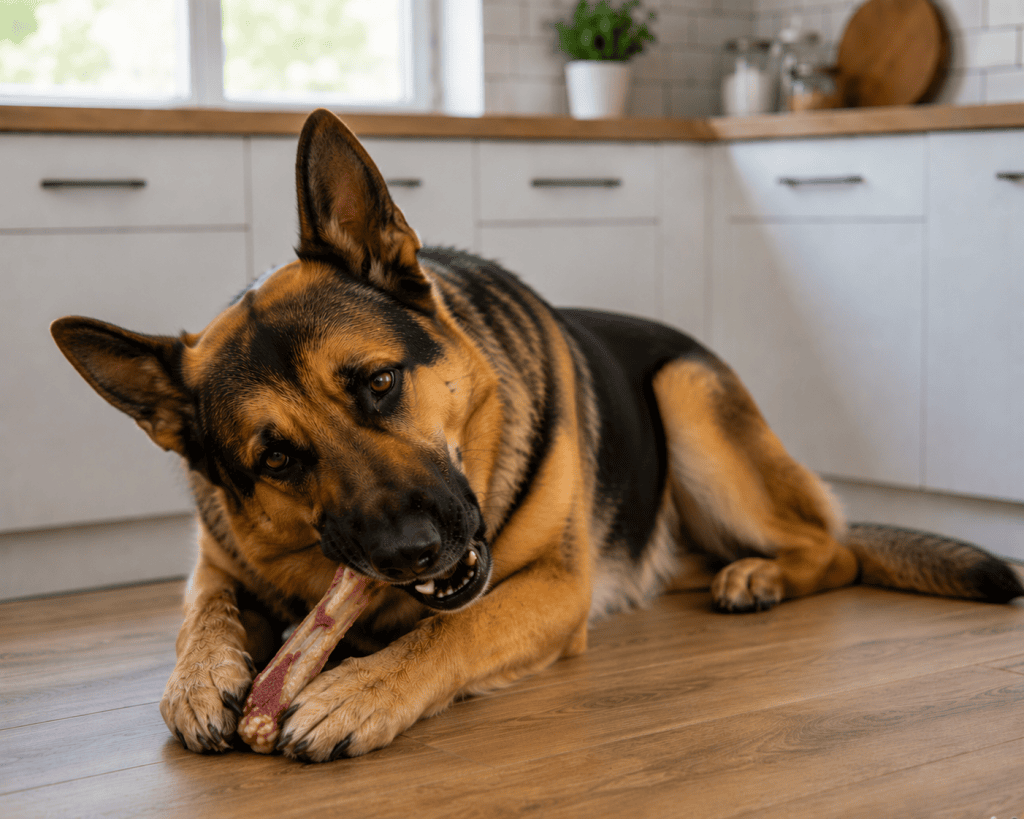
Why beef rib bones specifically are more complicated than large marrow bones:
Beef rib bones are structurally different from the large femur and knuckle bones covered in our Can Dogs Eat Raw Marrow Bones? guide. Rib bones are thinner, flatter, and more curved than the dense weight-bearing femur bones — which makes them more prone to cracking under chewing pressure even when raw. A large femur section maintains significant structural integrity even with sustained chewing. A beef rib may crack into a sizeable curved piece more readily.
This is why PetMD’s position on rib bones specifically is stricter than the general raw bone framework — it is not inconsistent with the raw feeding approach, but reflects the specific structural properties of rib bones.
If You Choose to Give Raw Beef Rib Bones — The Rules
For dog owners who decide to give raw beef rib bones — acknowledging the divided veterinary opinion — these conditions are not optional:
1. Always raw, never cooked. The absolute non-negotiable. A bone that has been cooked in any way is never safe.
2. Size must be appropriate. The bone must be significantly larger than the dog’s mouth — a dog that can fit a whole rib bone in its mouth should not have that size rib. Larger breeds need larger bone sections. Never give small, narrow rib sections to power chewers or large breeds.
3. Always supervise throughout. Never leave a dog alone with any bone. Monitor for signs the dog is cracking the bone into large pieces, generating sharp fragments, or attempting to swallow large sections.
4. Know your dog’s chewing style. Power chewers who crunch through hard objects rapidly are not good candidates for rib bones — the risk of cracking a rib into a dangerous fragment is much higher than with methodical chewers. Dogs who gulp food are not appropriate candidates.
5. Time limit. 10 to 15 minutes maximum per session. Remove, rinse, refrigerate. Discard after three to four days.
6. Source appropriately. Fresh raw bones from a reputable butcher. Freeze before use where possible to reduce bacterial load. Handle hygienically — wash hands, clean surfaces, separate from immunocompromised household members.
7. Consult your vet. The AKC recommends discussing raw bone feeding with your vet before introducing it. A vet who knows your dog’s health history, dental condition, and digestive history is best placed to advise.
The Dogs Who Should Never Have Rib Bones
Regardless of raw vs cooked, the following dogs should not have beef rib bones:
- Dogs who are aggressive power chewers that destroy objects rapidly
- Dogs who gulp food rather than chewing methodically
- Dogs with a history of intestinal blockage or gastrointestinal sensitivity
- Puppies under six months — developing teeth and smaller airways
- Senior dogs with significant dental disease or weakened teeth
- Dogs with pancreatitis history — the marrow fat content creates risk
- Small and toy breeds — rib bones from adult cattle may be too large or curved awkwardly for small dogs
What If My Dog Ate a Cooked Rib Bone?
Do not induce vomiting without veterinary instruction — bone fragments can cause additional injury on the way back up.
Contact your vet immediately, even if your dog appears normal. PetMD recommends seeking veterinary care even if you’re able to remove the bone — the vet can evaluate for trauma to the mouth, throat, and oesophagus, and do X-rays to confirm no bone fragments were swallowed.
Monitor closely for:
- Gagging, retching, or repeated swallowing attempts — possible throat or oesophageal lodging
- Vomiting — may indicate stomach irritation or partial blockage
- Bloody stool or dark tarry stools — sign of internal bleeding
- Abdominal pain, distension, or hunching — sign of perforation or blockage
- Lethargy, loss of appetite, difficulty defecating — signs of intestinal blockage
Symptoms of peritonitis (intestinal perforation) include severe abdominal pain, vomiting, fever, and rapid deterioration — this is a life-threatening emergency requiring immediate surgical intervention.
Emergency contacts:
- UK: Your vet or emergency animal hospital
- US: Your vet, emergency animal hospital, or ASPCA Animal Poison Control Center (888-426-4435)
Safe Alternatives to Beef Rib Bones
If you want to provide your dog with the dental health, enrichment, and chewing satisfaction that bones offer without the rib-specific risks, the following natural alternatives are consistently recommended:
Large raw marrow bones (femur/knuckle) — for dogs appropriate for raw bone feeding, large femur and knuckle bones from beef carry lower splintering risk than rib bones due to their density. See our Can Dogs Eat Raw Marrow Bones? guide.
Bully sticks — fully digestible, high protein, long-lasting. No bacterial contamination concern from the chewing process. One of the most widely recommended safe alternatives.
Yak chews — very hard-wearing, fully digestible, excellent for moderate to aggressive chewers.
Antler chews — naturally shed, very long-lasting, no processing. Note: antlers are very hard and carry tooth fracture risk for the most aggressive chewers.
Dried beef gullet or trachea — natural, single-ingredient, fully digestible, rich in glucosamine and chondroitin. See our Is Beef Gullet Safe for Dogs? guide.
VOHC-approved dental chews — for dog owners who prefer to avoid all bones entirely, the Veterinary Oral Health Council maintains a list of dental chew products proven safe and effective for dental health (vohc.org).
We cover all natural chew alternatives in detail in our Chews & Bones section.
The Bottom Line On Can Dogs Eat Beef Rib Bones
Cooked beef rib bones — never, without exception. The veterinary consensus is complete. Cooking makes all bones brittle and dangerous, and beef rib bones from human cooking are additionally contaminated with seasonings toxic to dogs.
Raw beef rib bones — a genuinely divided veterinary question. PetMD and the San Francisco SPCA recommend against all rib bones including raw. The AKC acknowledges that some owners and vets use raw bones under appropriate conditions. The structural properties of rib bones — thinner and more curved than large femur bones — make them more prone to splintering even raw, which is why they attract more caution than large marrow bones even within the raw feeding framework.
If in doubt, the safer choice is always a natural chew alternative that provides comparable dental and enrichment benefit without the bone-specific risks.
Salmon Oil For Dogs – Skin & Coat Support
Salmon oil is a powerful natural supplement that supports your dog’s skin and coat health. Rich in omega‑3 fatty acids, it helps reduce itching, dryness, and shedding while promoting a shiny, soft, and healthy coat. Regular use can also support joint health, heart function, and overall wellbeing, making salmon oil one of the most beneficial daily additions to your dog’s diet.
Check Salmon Oil For Dogs Skin And Coat On AmazonFrequently Asked Questions
Can dogs eat cooked beef rib bones? No — never. Cooked beef rib bones splinter dangerously, can cause choking, peritonitis, and intestinal blockage. The veterinary consensus is complete on this.
Can dogs eat raw beef rib bones? Veterinary opinion is divided. PetMD says no rib bones including raw. The AKC acknowledges some owners use large raw bones under supervision. The structural properties of rib bones make them higher risk than large femur bones even when raw.
What should I do if my dog ate a cooked rib bone? Contact your vet immediately. Do not induce vomiting. Monitor for gagging, vomiting, blood in stool, abdominal pain, and lethargy. Seek emergency care if any of these symptoms develop.
Can dogs eat the meat from ribs? Plain, unseasoned, cooked rib meat is not toxic. The concern is always the bone and the seasonings used in human rib preparation. Never give seasoned rib meat from barbecues or dinners.
Are beef ribs safer than pork ribs for dogs? Beef rib bones are typically larger and thicker than pork rib bones, which reduces but does not eliminate the splintering risk when raw. Cooked ribs of any type are equally dangerous.
What is a safe alternative to rib bones for dogs? Bully sticks, yak chews, antler chews, large raw marrow bones (for appropriate dogs under supervision), and VOHC-approved dental chews all provide comparable dental and enrichment benefits without the rib-specific risks.
Sources:
- PetMD — Dr. Krystal Dickinson DVM: no, dogs should not have rib bones; rib bones are prone to splintering causing choking, broken teeth, internal injuries, or blockages; cooked bones can cause peritonitis; intestinal blockage can be fatal (petmd.com): https://www.petmd.com/dog/nutrition/can-dogs-eat-rib-bones
- San Francisco SPCA — feeding dogs bones of any kind — cooked or raw, including rib bones — is not recommended by veterinarians; modern veterinary knowledge shows bones can cause serious and often life-threatening injuries (sfspca.org): https://www.sfspca.org/blog/what-bones-can-dogs-eat/
- Dial A Vet — cooked beef rib bones are not recommended; cooking dries out and weakens bones making them likely to break; can cause mouth injuries, digestive obstructions, and peritonitis; raw bones can be safer but still pose risks including contamination and dental damage (dialavet.com): https://www.dialavet.com/vet-answers/cooked-beef-rib-bones-safe-dogs-9720
- Renee Schmid DVM, Pet Poison Helpline/Daily Paws — these bones, cooked or uncooked, are a risk to dogs for causing foreign body obstructions that may require surgery (dailypaws.com): https://www.dailypaws.com/dogs-puppies/dog-nutrition/what-can-dogs-eat/can-dogs-eat-rib-bones
- Cornell University College of Veterinary Medicine — gastrointestinal foreign bodies and peritonitis are life-threatening veterinary emergencies; pancreatitis from high-fat bone marrow is one of the most common gastrointestinal emergencies in dogs (vet.cornell.edu)
For the complete raw vs cooked bone framework, see our Can Dogs Eat Bones? guide. For safer large raw bone alternatives, see Can Dogs Eat Raw Marrow Bones? For natural digestible chew alternatives, browse our Chews & Bones section — or head to our full Can Dogs Eat series for more guides on safe and unsafe foods for dogs.