The best treat for dog training is the one your dog will work hardest for — and it is almost certainly something soft, small, and intensely smelly. Everything else follows from that principle.
The AKC distils the framework clearly: every dog has a hierarchy of rewards, and most of them would put smelly items like cheese or bacon up at the top. The key is matching the treat’s value to what you’re asking the dog to do and where you’re asking them to do it.
Table of Contents
Dr. Carlo Siracusa DVM PhD MS, clinical assistant professor of behaviour medicine at the University of Pennsylvania School of Veterinary Medicine, is specific: as a general rule, the more hectic the environment, the better the value of the treat has to be. You need a treat that will hold the dog’s attention and keep him focused on the training exercise.
This guide covers what makes a training treat genuinely effective, the three qualities every good training treat should have, the high-value vs low-value hierarchy, the best natural training treats available, and practical guidance for using treats across different training scenarios.
The Three S’s — Small, Soft, and Stinky
Jamie Popper, head dog trainer at Woof — cited by NBC Select — provides the most memorable framework for training treat selection: typically in training, we want to use a treat that hits the three S’s: small, soft, and stinky.
Each of these qualities has a specific functional reason:
Small
Dr. Siracusa is direct: training treats should be soft and small — the size of a pencil eraser, or even half that. The AKC confirms: even for large dogs, a pea-sized treat is plenty. For small dogs, you can use even tinier pieces.
The reason size matters in training is about momentum. During a positive reinforcement training session, you want multiple repetitions of a behaviour in a short time — each repetition followed by an immediate reward. A large treat takes time to chew, breaks the training rhythm, and can fill your dog up quickly, reducing motivation. A pencil-eraser-sized piece is consumed in under three seconds, refocusing the dog immediately on the next repetition.
Practical point: many commercial treats are far too large for training as sold. Buy larger treats and break or cut them into training-sized pieces. A single large treat cut into eight pieces becomes eight training rewards at a fraction of the calorie cost.
Soft
The AKC confirms: soft dog treats are great for training because compared to crunchy ones, they’re easier and faster for your dog to eat. Biscuits can be fine for one-off rewards, but during a training session, waiting for your dog to find every piece that’s crumbled to the floor means time away from teaching.
Soft treats also carry more aroma than hard, dry treats — which directly contributes to the third quality.
Practical point: if you have hard treats, lightly warming them in a microwave for a few seconds softens them and releases aroma. A few seconds is sufficient — you are warming, not cooking.
Stinky
Dr. Siracusa notes that food with a strong aroma makes a good training treat, as the scent will grab a dog’s attention. Kinship’s training guide is vivid about why: dogs experience the world through their noses — 33% of a dog’s brain is dedicated to interpreting odours — so the smellier the treat, the better.
Smell is the primary sensory channel through which dogs experience food. A treat that is genuinely appealing to a dog’s nose cuts through environmental distraction in a way that a dry biscuit simply cannot. In a busy training class, a park with other dogs, or on a street with interesting smells, you need a treat that competes with the environment — and strong-smelling treats are the tool for that.
The practical smell hierarchy (most to least pungent):
- Freeze-dried or dehydrated liver
- Fresh or dehydrated chicken heart
- Dried fish (sprats, salmon skin, sardine pieces)
- Soft cheese (mature cheddar, plain mozzarella)
- Plain cooked chicken breast
- Commercial soft meat treats
- Hard kibble (lowest aroma)
The Fourth Quality — Low Calorie
Rover’s guidance adds the essential fourth quality: nutritious and delicious aren’t mutually exclusive. The best healthy dog training treats are nutritionally balanced, low to moderate in calories, and free from additives that might negatively affect your dog’s health.
The 10% daily calorie rule applies to all treats including training treats — and on active training days with many repetitions, calorie accumulation is a real risk. Dr. Siracusa and Sumridge both confirm: we don’t give bigger treats to bigger dogs. All dogs get little tastes.
The most practical solution — and the one that eliminates calorie concern entirely — is using your dog’s daily kibble allowance as training treats. Reduce the meal portion by the equivalent of the treats used during training, and the daily calorie budget remains balanced. The AKC confirms this approach, and the Mississippi Animal Behavior Consulting blog notes: because kibble is complete and balanced food, you can decrease supper a little without worrying about nutritional gaps.
Freeze-dried liver treats are the gold standard for combining high value with low calories — Rover notes that freeze-dried beef liver and heart treats can contain less than one calorie per treat. This is the closest thing to a perfect training treat: maximum scent and palatability motivation at negligible calorie cost.
Dog Treat Pouches – Perfect for Training Treats
Dog treat pouches make training easier, cleaner, and more efficient. Designed to hold training treats within quick reach, these pouches help you reward good behavior instantly. Many feature secure closures, easy‑access openings, and built‑in clips or belts, making them ideal for walks, obedience sessions, and outdoor adventures. A high‑quality treat pouch keeps your hands free and your dog focused on learning.
Check Dog Treat Pouches On AmazonHigh-Value vs Low-Value Treats — The Hierarchy
This is the most practically important concept in training treat selection, and Dr. Siracusa’s framework is the clearest: as the environment becomes more stimulating, the value of the treat must increase to maintain attention.
Low-value treats — used for:
- Training at home in a quiet, familiar environment
- Practising well-established commands the dog knows reliably
- Rewarding calm behaviour that doesn’t require great effort
- Frequent repetition training where calorie accumulation is a concern
Low-value examples: dry kibble, plain rice cakes, plain vegetables (carrot, cucumber), plain commercial biscuits
Medium-value treats — used for:
- Garden or familiar outdoor environments
- Learning new commands that are progressing but not yet solid
- Rewarding focus and attention in mild distraction settings
Medium-value examples: soft commercial treats, small pieces of cheese, cooked chicken breast, dried fish skin
High-value treats — used for:
- Busy environments — parks, training classes, busy streets
- Recall training — the most important command to have on the highest-value reward
- Breaking through high distraction — other dogs, wildlife, exciting stimuli
- New, difficult commands requiring significant concentration
High-value examples: freeze-dried liver, dried chicken hearts, fresh or dehydrated meat, small sardine pieces, high-quality cheese
The key principle: reserve the highest-value treats for the most challenging training scenarios. If your dog gets liver treats for sitting quietly on the sofa, liver loses its power as a training motivator in the park. Scarcity creates value — your dog should know that the smelliest, most exciting treats only appear in training contexts that demand their best performance.
The Best Natural Training Treats — Our Guide
Natural, single-ingredient treats are the best training treat choice for three consistent reasons: transparent ingredients, genuine protein value, and — critically — the most potent natural aromas available.
Freeze-Dried or Dehydrated Liver — The Gold Standard
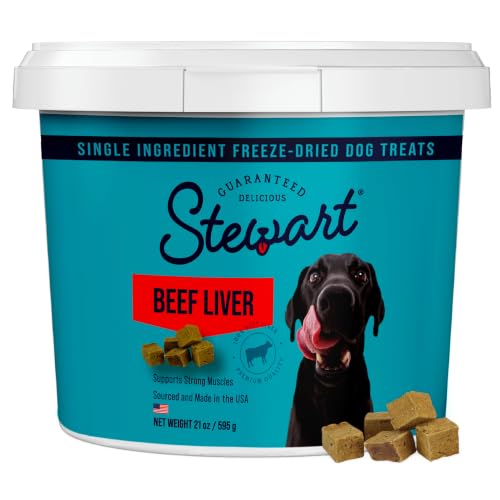
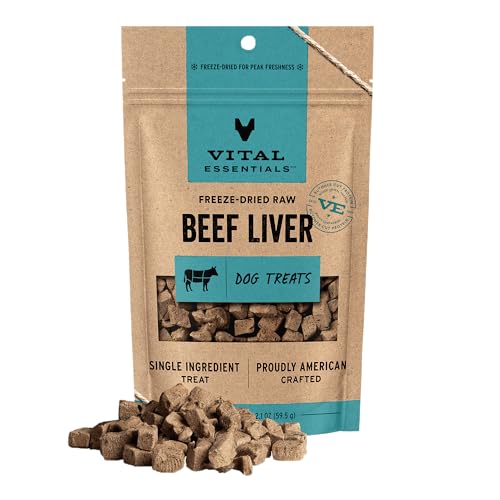
Beef liver, chicken liver, and lamb liver treats are the most consistently recommended high-value natural training treats among professional trainers. The freeze-drying or dehydration process concentrates the aroma and flavour without any additives. Freeze-dried varieties typically contain under one calorie per piece — the perfect combination of maximum motivation and minimal calorie cost.
Our Can Dogs Eat Beef Liver? guide covers the nutritional case for liver in detail. For training purposes: freeze-dried liver, broken into pencil-eraser pieces, is the closest thing to a universally effective training treat. Very few dogs do not respond to it.
The 5% rule applies: even in treat form, liver should stay within the 5% of daily diet guideline given its vitamin A and copper content.


Dried Fish — Sprats, Salmon Skin, Sardines
Air-dried sprats, dried salmon skin strips, and sardine pieces are among the most pungent natural treats available — and pungency is exactly what training requires. They are rich in omega-3 fatty acids, complete protein, and genuinely low in calories per piece.
Small dried sprats given whole to larger dogs or broken into pieces for smaller dogs are among the most versatile training treats available. The smell carries well across a training environment and the motivation level is consistently high.
See our Can Dogs Eat Canned Sardines? and Can Dogs Eat Salmon Fish Skin? guides for more on the nutritional value of fish-based treats.
Air-Dried Chicken or Turkey — The Reliable Middle Ground
Plain air-dried chicken breast or turkey pieces provide reliable motivation for the majority of dogs without the vitamin A management concern of liver treats. Lean, high-protein, genuinely natural — chicken and turkey treats can be used freely within the 10% daily calorie guideline. Ideal for everyday training sessions where high-value motivation is needed but you want to use something freely without tracking liver intake.
Cheese — The Emergency High-Value Option
Mature cheddar cut into tiny cubes is the go-to emergency high-value treat for professional trainers — the fat and salt content make it genuinely irresistible to most dogs, and its availability from any supermarket makes it the most accessible option when other treats run out.
Limit to small amounts given the fat and lactose content. See our Can Dogs Eat Cheddar? guide for the full detail. A tiny cube of mature cheddar as the highest-value treat in a difficult training scenario is a legitimate and effective tool.
Chicken Hearts — The Trainer’s Secret
Dried chicken hearts are a staple treat for many professional dog trainers. They are small enough to use whole without cutting, intensely aromatic, high in protein, and genuinely low in calories. The texture is soft when dried appropriately. For trainers who want a consistent, easy-to-use high-value natural treat without the liver quantity management concern, dried chicken hearts are an excellent choice.
Plain Cooked Chicken Breast — The Accessible Choice
Plain boiled or baked chicken breast, diced into tiny pieces, is the most reliably available high-value training treat for most dog owners. Almost every dog responds to fresh chicken. No additives, lean protein, and easily prepared at home. The limitation is freshness — cooked chicken needs refrigeration and has a short shelf life compared to dried treats.
Kibble — The Underused Low-Value Option
For home training in quiet environments, your dog’s regular kibble is a legitimate and calorie-neutral training reward — as discussed above. Not appropriate for high-distraction environments, but perfect for daily training practice sessions at home where the training itself provides sufficient motivation.
Training Treats for Puppies
The same three S’s apply for puppies, with two additional considerations:
Smaller pieces than you think — puppy training treat pieces should be even tinier than the pencil-eraser benchmark — closer to a grain of rice or half a pea for very small breeds or young puppies. Their tiny daily calorie allowances make size management critical.
Softer textures — developing puppy teeth are not ready for hard treats. Soft natural treats, very small pieces of cooked chicken, or tiny pieces of soft dried meat are appropriate. Hard biscuits and jerky-style treats are not.
See our Are Treats Good for Puppies? guide for the complete puppy-specific framework.
Training Treats for Specific Scenarios
Recall Training — Always Your Highest-Value Treat
Recall — coming when called — is the most important command your dog will ever learn and the one that most directly affects their safety. Use your absolute highest-value treat exclusively for recall practice. Never use your best treat for any other command, and always pair successful recall with the most rewarding treat in your repertoire. Freeze-dried liver, fresh chicken, or a piece of cheese should be reserved for this purpose.
Loose Lead Walking — Consistent, Frequent Rewards
Loose lead training requires high repetition of small rewards. The treat needs to be portable, easy to deliver while walking, and appropriate for many repetitions without filling the dog up. Soft dried meat pieces or tiny cheese cubes work well. Use a treat pouch for hands-free access.
Crate Training — High Value to Build Positive Association
Delivering a genuinely exciting treat into the crate — freeze-dried liver, a Kong stuffed with something delicious — builds positive associations with the crate rapidly. See our Can Dogs Eat Pumpkin? and Can Dogs Eat Greek Yogurt? guides for Kong-filling ideas.
Settling and Calm Behaviour — Natural Chews
Long-duration settling — a dog learning to be calm in a specific place for an extended time — is best rewarded with a natural chew rather than repeated small treats. A bully stick, beef gullet strip, or appropriate raw bone gives the dog something to do in their settled position while reinforcing the duration. See our Is Beef Gullet Safe for Dogs? and Can Dogs Eat Raw Marrow Bones? guides.
Common Training Treat Mistakes
Using the same treat for everything — the AKC is clear: dogs can become bored with the same old treat. Rotating treat types maintains motivation and prevents the treat losing value through familiarity.
Treats too large — the most common mistake. If your dog takes more than three seconds to eat a training treat, it is too large. Cut it smaller.
Wrong value for the environment — dry kibble in a busy park will not hold a dog’s attention. Match treat value to distraction level every time.
Not reducing meal portions on training days — if your dog receives significant treat volume during training, their regular meal should be reduced accordingly. The 10% rule applies to total daily treat intake, not just non-training treats.
Phasing treats out too early — treats are most powerful as a training tool during the learning phase. However, phasing them out before a command is truly solid can destabilise it. Reduce gradually, not suddenly — maintain some treat reward indefinitely for commands like recall that you want to remain bombproof.
The Bottom Line
The best training treat is small, soft, and stinky — and matched in value to the difficulty of what you’re asking your dog to do and where you’re asking them to do it. Freeze-dried liver, dried fish, air-dried chicken, and small pieces of cheese are the natural training treats that professional trainers and veterinary behaviourists consistently reach for. Kibble is appropriate for quiet home training. Your highest-value treat should be reserved for recall and the most challenging training scenarios.
Natural treats win in training because they deliver maximum scent motivation with minimal calories and completely transparent ingredients. A pencil-eraser piece of freeze-dried liver at under one calorie per piece, delivered the instant a correct behaviour occurs, is among the most effective training tools available — and one of the most nutritious.
Frequently Asked Questions
What is the best treat for dog training? Freeze-dried liver is the most consistently effective natural training treat — maximum aroma, under one calorie per piece, and genuinely irresistible to most dogs. Dried fish, air-dried chicken, and small cheese cubes are excellent alternatives.
What size should training treats be? Pencil-eraser size — or half that for small dogs and puppies. Dr. Carlo Siracusa DVM PhD at the University of Pennsylvania School of Veterinary Medicine recommends no bigger than a pencil eraser, or even half that.
Should training treats be soft or hard? Soft — they are faster to eat, maintain training momentum, and carry more aroma than hard, crunchy treats. Hard biscuits are not ideal for active training sessions.
Can I use kibble as training treats? Yes — for quiet home training in familiar environments, your dog’s regular kibble is a legitimate and calorie-neutral training reward. Reduce the evening meal by the equivalent amount.
How many training treats can I give per day? Treats should not exceed 10% of daily calorie intake. On heavy training days, reduce regular meal portions accordingly.
What is the highest-value treat for dogs? Freeze-dried liver, fresh chicken, or small cheese pieces are typically the highest-value treats for most dogs. Reserve these for recall training and the most distracting environments.
Sources:
- American Kennel Club — pea-sized treat is plenty even for large dogs; soft treats are faster to eat and smellier than crunchy ones; dogs can become bored with the same treat; every dog has a hierarchy of rewards with smelly items at the top; kibble can be used as a training reward (akc.org): https://www.akc.org/expert-advice/training/dog-training-treats/
- PetMD — Dr. Carlo Siracusa DVM PhD MS, clinical assistant professor of behaviour medicine at the University of Pennsylvania School of Veterinary Medicine: training treats should be soft and small — size of a pencil eraser or even half that; more hectic the environment, better the treat value must be; food with strong aroma grabs dog’s attention; your dog is going to tell you which treats he likes best (petmd.com): https://www.petmd.com/dog/training/tips-finding-your-pups-million-dollar-dog-training-treats
- Rover — nutritious and delicious aren’t mutually exclusive; best healthy training treats are nutritionally balanced, low to moderate in calories, free from additives; freeze-dried beef liver and heart treats can contain less than one calorie per treat (rover.com): https://www.rover.com/blog/reviews/healthy-dog-training-treats/
- NBC Select — citing Jamie Popper, head dog trainer at Woof: three S’s for training treats — small, soft, and stinky; small allows dog to quickly consume and move to next repetition; stinkier the treat the more motivating it is; treats should make up no more than 10% of daily calories (nbcnews.com): https://www.nbcnews.com/select/shopping/best-dog-training-treats-rcna215002
For specific natural training treat options, browse our Training Treats section for our independently reviewed recommendations. For detailed nutritional guides on the best natural training treats, see our articles on Can Dogs Eat Beef Liver?, Can Dogs Eat Canned Sardines?, Can Dogs Eat Cheddar?, and Is Beef Gullet Safe for Dogs? — or browse our full Can Dogs Eat series.